
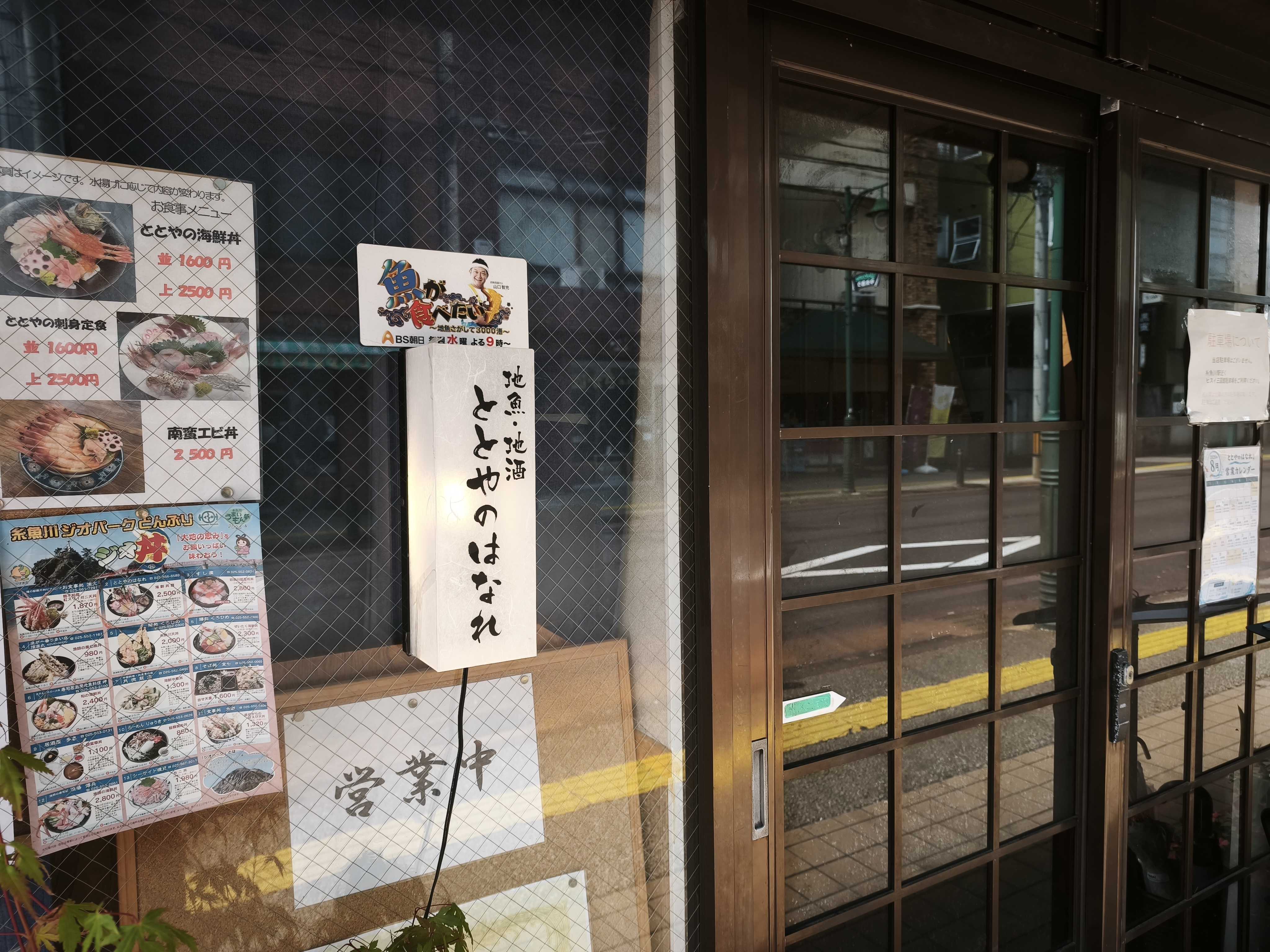
Itoigawa is on the Japan Sea, so the obvious thing to eat here is fish. Totoya no Hanare is two minutes from the station, on a quiet street, behind a noren — the split cloth curtain hung across a doorway to show that a place is open. We found it by walking past it.
Inside it is small and lined with wood. The seats are partitioned into something close to half-private booths, so you are not eating in front of strangers. A student on his summer holiday and an older woman greeted us the way a relative’s house greets you.
The couple who run it sell fish
That is the whole explanation for this restaurant, and it shows up twice: in what they buy, and in what they do to it before it reaches the table.
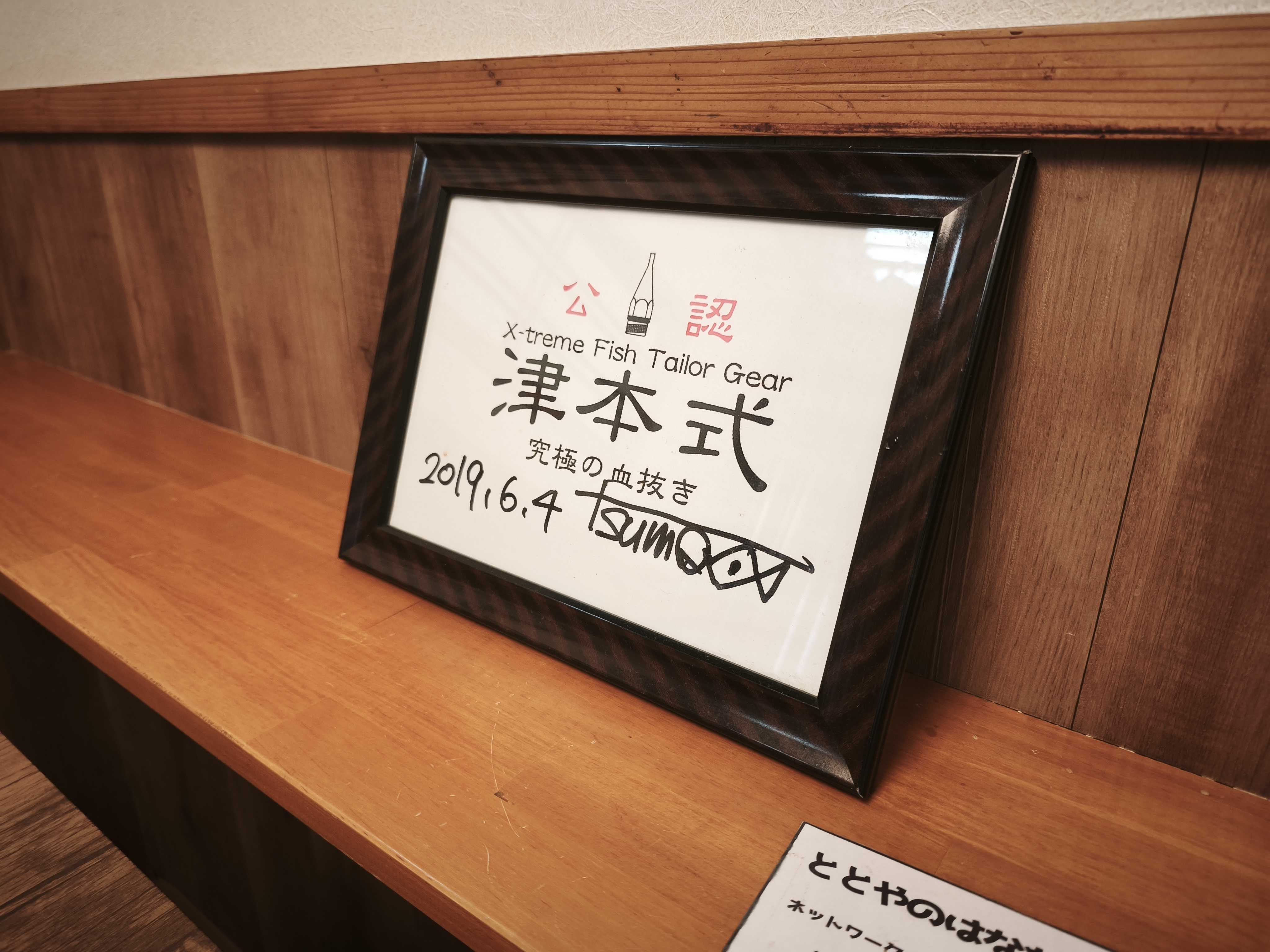
On the wall there is a signed board certifying the restaurant in the Tsumoto method — Tsumoto-shiki, worked out by a fish preparer named Tsumoto Mitsuhiro and now used across Japan. In outline: water is run under pressure through the artery of the fish to force the blood out of it, and the nerve is destroyed. Fish handled this way lose the smell people are describing when they say a fish tastes fishy. More to the point, they can then be aged for a week or more rather than eaten straight away, and ageing concentrates them.
The restaurant association’s own listing states that three certified practitioners of the method work here. That is a lot for a small restaurant in a town this size.
The sashimi set
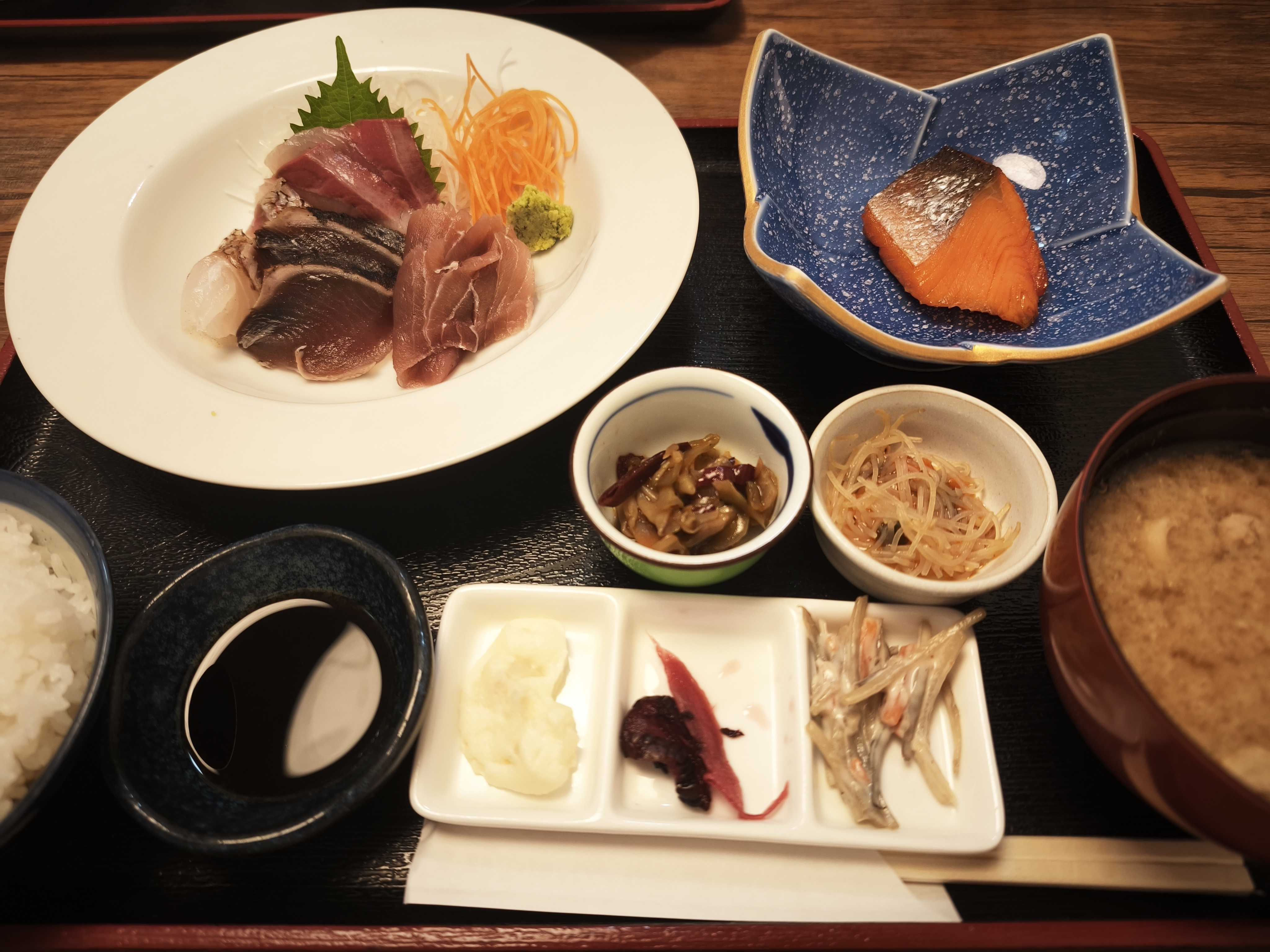
What arrives first is the number of dishes. One tray carries the sashimi, a grilled fish, a glass-noodle salad, a small side dish, rice, and a large bowl of ara-jiru — soup built from the head and bones left after a fish is filleted.
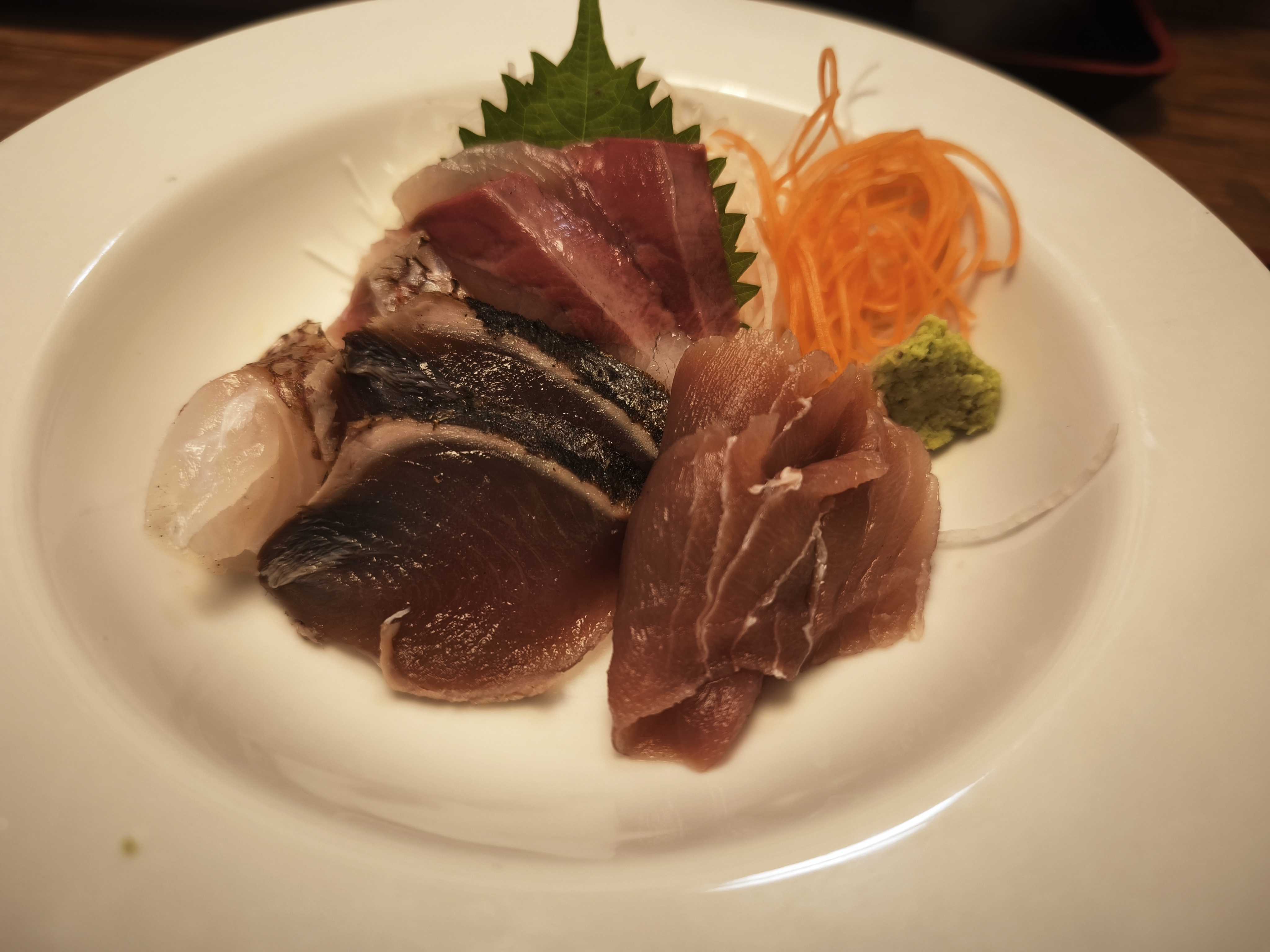
The sashimi changes with whatever came in that morning. On the day we went it ran to several kinds, one of them a white fish with the skin seared. There was no fishy edge to any of it, and the texture was dense, closer to sweet than to fresh.
The ara-jiru is the dish that gives the place away. It is loaded with bones and heads to a degree an ordinary restaurant would not attempt, because an ordinary restaurant does not have that much fish going through its kitchen. A fishmonger does.
The seafood bowl
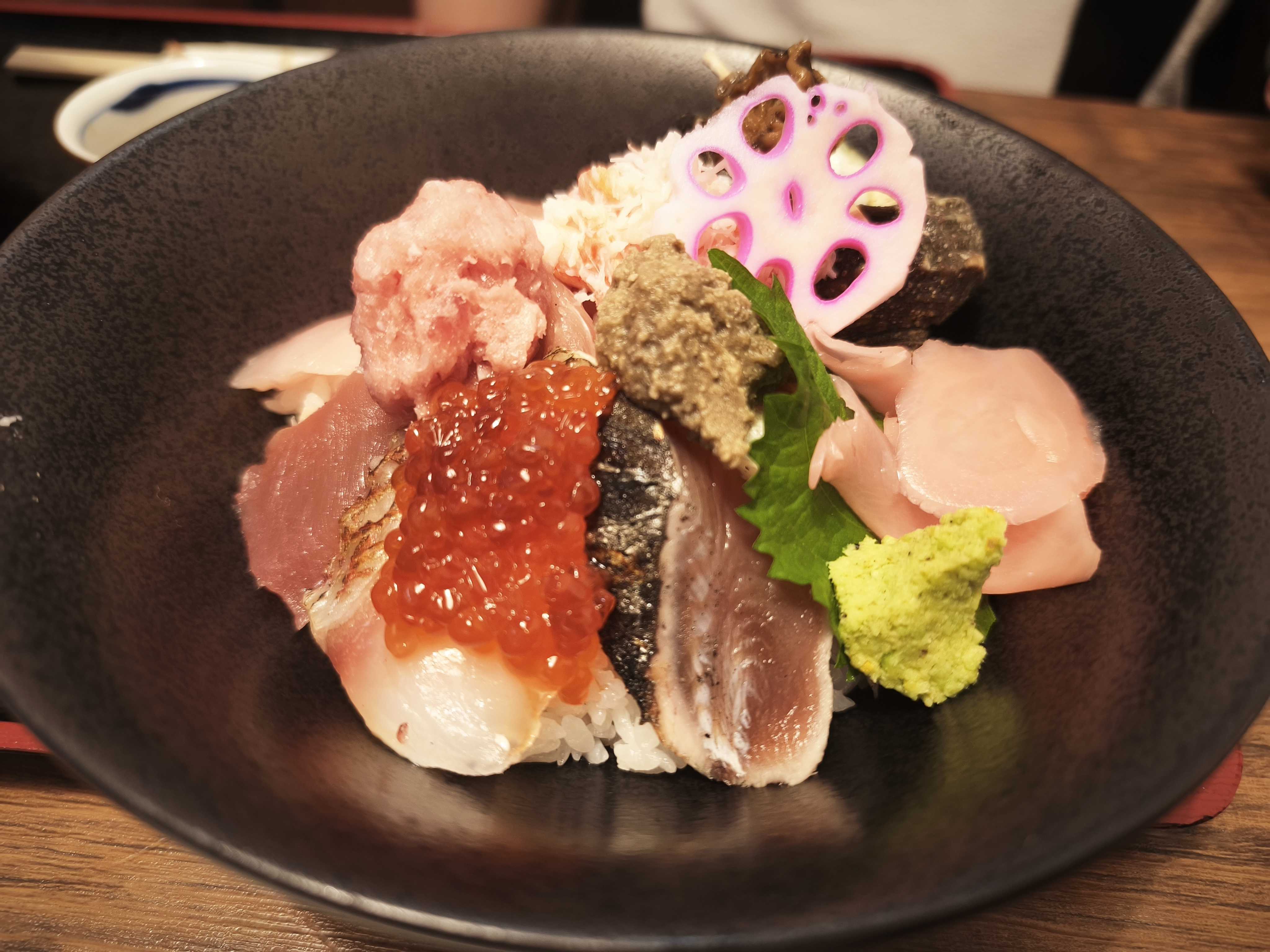
My friend ordered the seafood bowl at the upper grade: salmon roe, crab meat, crab miso, minced fatty tuna and sashimi from local fish, packed into a large bowl. Every mouthful is a different thing.
Good to know
- There is no fixed closing day. Telephone before making a special trip: 025-556-6589, or +81 25-556-6589 from outside Japan. Expect the call to be in Japanese.
- Lunch stops earlier than you would think. The room closes at 14:00 and last orders are at 13:30.
- Local sake is served alongside the fish.
- The restaurant belongs to the Itoigawa Umaimonkai, the association of local restaurants that invented the town’s black yakisoba.