In the 1930s a writer who lived in this town read a myth and decided it was a map.
The myth is in the Kojiki, the oldest surviving book in Japan, set down in the eighth century. In it there is a princess of this coast named Nunakawa-hime, and her name is bound up with jade. She turns up in this piece under three titles — the princess of the story, the jade queen the town calls her, the goddess the shrine here is dedicated to. Same woman each time.
The writer was Sōma Gyofū (1883–1950), born in this town. He went to Tokyo to read English literature and at twenty-four wrote the anthem Waseda University still sings, and after that the words to well over a hundred school songs in this prefecture alone. Then he came home.
He reasoned that if the story belonged to this place, then the stone in the story ought to belong here as well — and that nobody had ever gone to look, because everybody already knew the answer.
Everybody did know the answer. Scholars were satisfied that the jade found in Japanese archaeological sites had been brought in from mainland Asia. Japan had no jade of its own. It never had.
Gyofū passed the idea to a visitor, who passed it on again. A third man went up the Kotaki river, a little way inland from here, and came back down with a blue-green stone. Accounts differ on the year — some say 1935, and the 1939 paper that settled the matter says 1938 — but everyone agrees on the day. It was 12 August.
Nearly all the jade found at Japanese sites turned out to have come from this one small town.
A hypothesis, clearly labelled as a hypothesis, sent a man to a river, and the hypothesis held. That happened here, on the record, within living memory.
I came to Itoigawa wanting the same two things Gyofū was after: some trace of Nunakawa-hime, and a piece of jade of my own.
Where all this sits in time
| about 5,000 years ago | Jomon people — Japan’s hunter-gatherers, long before rice farming — carry jade from here the length of the archipelago |
| early 500s | jade working stops in Itoigawa |
| 538 | Buddhism reaches Japan |
| 927 | Nunakawa-hime’s shrine is entered in the national register of shrines |
| 1930s | Gyofū reads the myth, and the jade is found again |
Look at what is missing from it. Between the early 500s and the 1930s the only two entries are about something else — a religion arriving, a list being compiled. For roughly fourteen hundred years, nobody in Japan knew what jade was. That gap is what I came to look at.
One thing about the town before the town itself: there is no river in Itoigawa called the Itoigawa. The rivers here are the Himekawa, the Kotaki and the Ōmi (-kawa and -gawa both mean river). Where the name came from is not settled, and the account I like has it from people who arrived from the Korean peninsula, settled here, and went by the name Itoi. That is a theory rather than a fact. From here on, everything of that kind carries a label.
1. A plate of black noodles
Start with lunch, because the town has made itself a dish.
Itoigawa black yakisoba is not old. An association of local restaurants invented it as something the town could be known for, and fixed only three things about it: squid from Niigata, wheat noodles, squid ink. Everything after that is left to each shop, so the intended way to eat it is in more than one of them. The same association also runs a red version, made with nanban shrimp — the local name for sweet shrimp — and a white one made with megisu, a small fish landed here.
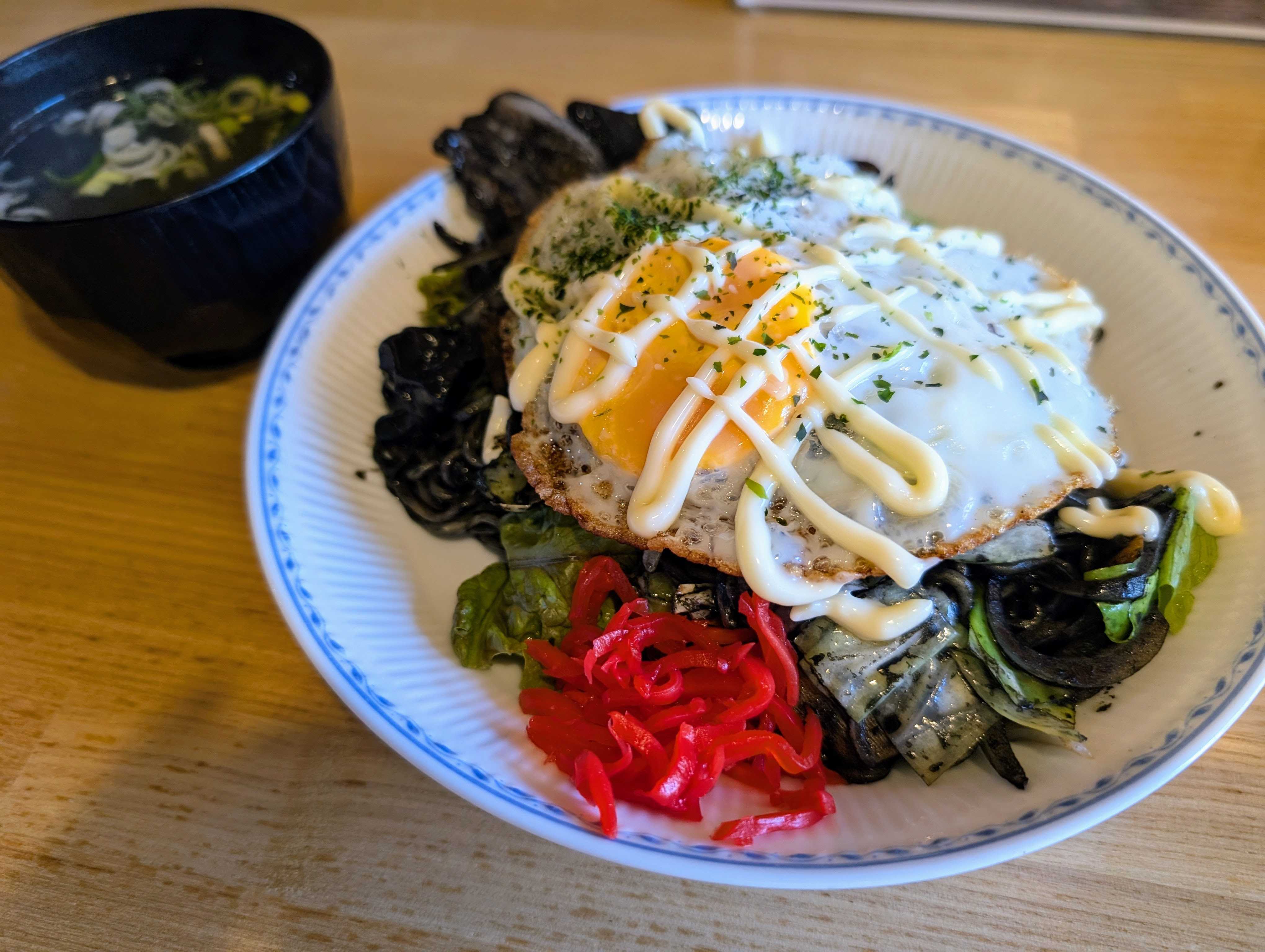
It looks heavy. It isn’t. The base is salt — light, and mild. And afterwards your mouth is black. Not slightly.
Which is the part I liked. To order it in company is to accept an hour of looking ridiculous, and the town has built that small toll into its own signature dish: a delicious embarrassment, an ordeal that locals and visitors go through on exactly the same terms, with the good thing waiting on the far side. Nothing supports that reading except one afternoon and one blackened mouth. I am keeping it anyway.
Where to eat this. Aoi Shokudo, two minutes from the north exit of Itoigawa station, opens at ten in the morning and does a mild, salt-based version. → Aoi Shokudo
How a Mitate file works
That was the easy one. Everything after this is built to a fixed shape, so here is the machinery first.
Mitate (見立て) is a term from the tea ceremony and from garden design. It means seeing one thing as another, on purpose, and taking responsibility for the seeing.
You are reading this in English about a place whose sources are all in Japanese. You cannot check me. Every entry here is split three ways, and the seams are left showing:
- What is there — what I saw, or what a source says.
- The mitate — mine. Argue with it.
- What holds up — what survives checking, and what does not.
Gyofū’s mitate held. One of mine does not, and I have left it in.
2. The queen behind the hall
What is there. To see what is standing in these grounds you need two names and one argument.
A Japanese shrine is usually two buildings. At the front is the worship hall, where visitors stand; behind it, closed, is the main hall, where the deity is held to reside. You pray at the first and rarely see inside the second.
Here the full title is Amatsu Jinja and Nunakawa Jinja, and the arrangement is unusual: one worship hall, thatched, wide and low, with a board outside carrying both names.
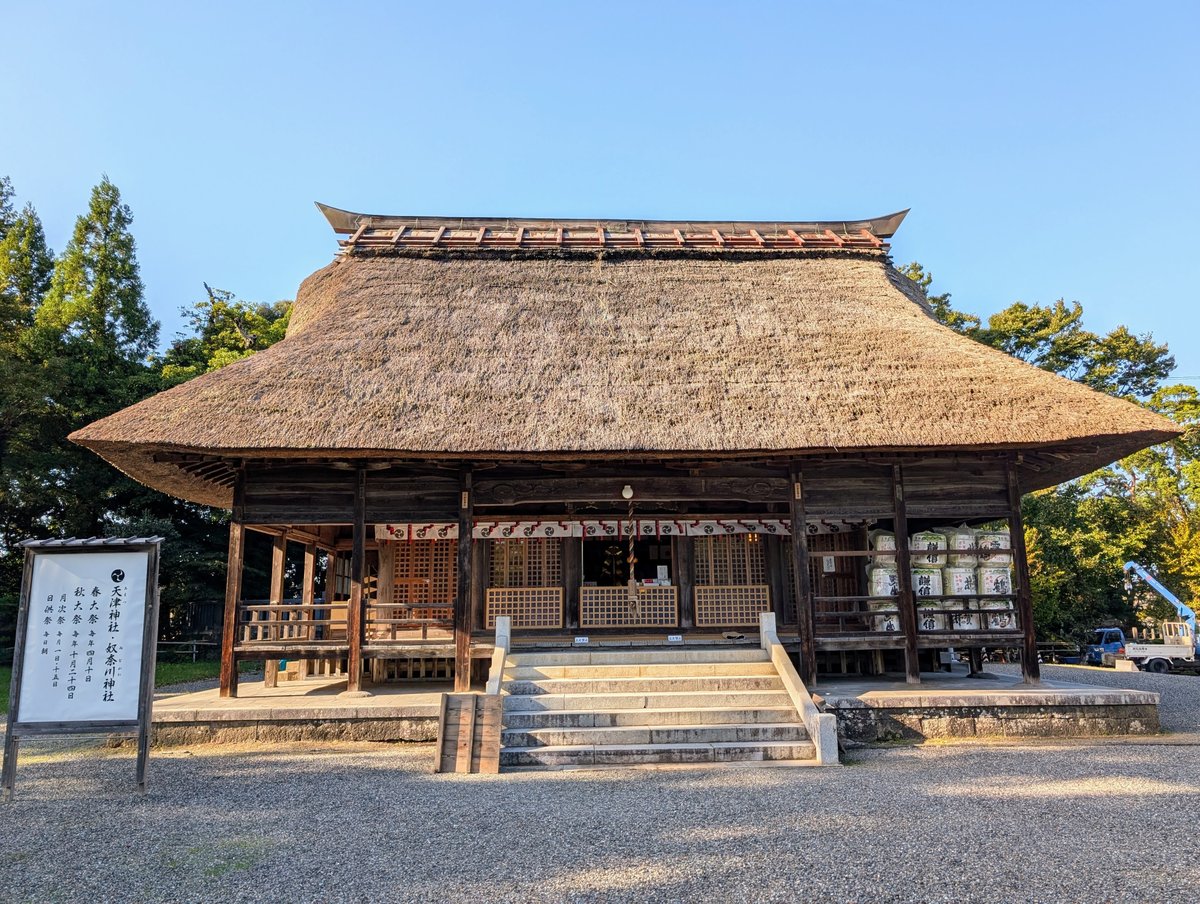
Behind it stand two main halls, side by side on a stone platform. They are not the same size. The one on the right is larger, with deeper carving under the eaves. The one on the left is smaller and plainer.
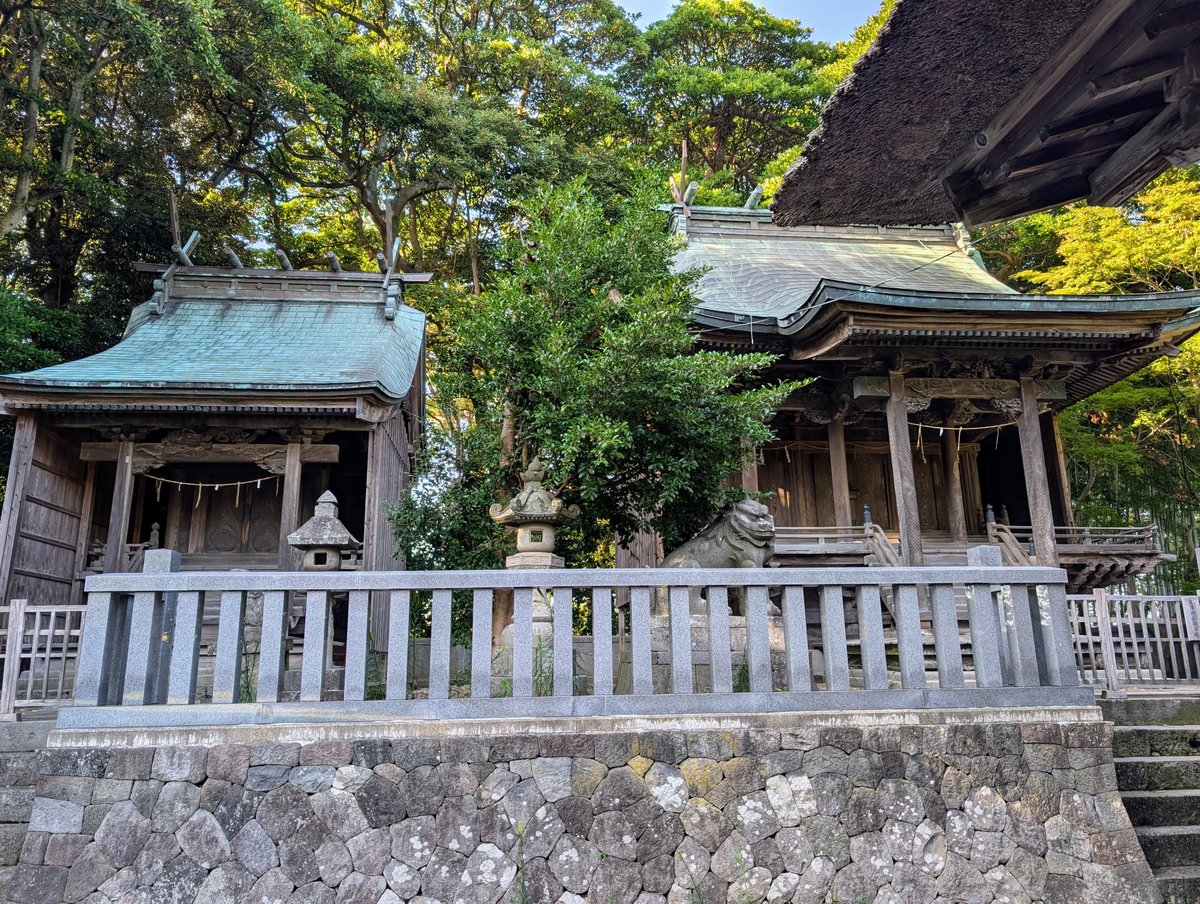
The larger one, on the right, is Amatsu Jinja, and it belongs to the winners. It is dedicated to Ninigi. He is the grandson of the sun goddess. The imperial line claims descent from him. In the Kojiki he is the one who comes down from the sky to take charge of the country, which tells you who was holding the pen.
The smaller one, on the left, is Nunakawa Jinja, and it belongs to this coast. It is dedicated to Nunakawa-hime, and to Yachihoko. Yachihoko is the great deity of Izumo, a region on the far side of the country. Izumo had its own gods and its own stories, old enough and strong enough that the court could not simply write over them; it had to fold them in. In the Kojiki, Yachihoko travels up here from Izumo to court her.
So: the national story and the local story, side by side, under one roof at the front and on one platform at the back — and one of them built noticeably bigger than the other. Nobody designed that as a monument. It accumulated.
And in the middle of the timeline, the stone itself goes quiet. Production of magatama — the comma-shaped jade beads — ends in Itoigawa in the early 500s, and by the eighth century jade has gone out of Japanese life altogether. It stays gone until Gyofū.
The mitate. Standing in front of the two halls, I read the difference in their size as a sealing — not history overwritten, but history put away with a lid on it. The court’s gods get the carving and the scale. The queen who owned the stone gets the smaller box next door, and sleeps there with her stone.
What holds up. Badly — in the part I liked best.
Nunakawa-hime’s shrine was never suppressed. It is in the register of state-recognised shrines compiled in 927, one of thirteen in this district. She was on the official list, by name, in the same centuries the jade was disappearing. Whatever happened here, it was not deletion.
The disappearance of the jade is real, but the reason for it is not settled. There are at least three explanations in the literature and none has won: the arrival of Buddhism in 538 and the fall of the shrine priesthoods that had used jade as a prestige good; a general decline in the use of ornamental stone from the sixth century onwards; and — this last one is a suggestion others have made, not mine — that people here hid the source deliberately when large search parties came in from western Japan.
So sealed is my word, and only my word. The archaeology says vanished. The shrine’s own records say honoured. Those are two different stories, and I don’t get to fold them into one.
What survives is the smaller thing I started with, and it is enough: two accounts of the past on one piece of ground, both of them still working. Barrels of offered sake were stacked along the worship hall the day I came.
3. A room full of people who read stones
What is there. Before going out to the beach I stopped at the Chiisana Itoigawa Hisui Genseki-kan, a little museum of raw jade — a private collection run out of a converted house a few minutes east of the station. There is an entry fee, and it includes a coffee. It only opens on certain days, so call ahead: 025-552-3621, or +81 25-552-3621 from outside Japan. Expect the call to be in Japanese.
The owner was not the only person there. There was a local man who used to pick jade up off the beach when it was still lying around, and sell it. A young man who had moved here from Tokyo because he liked jade too much. A man who comes every month to buy stock and sells it on an auction site. They taught me the basics: the types of jade, how to tell it from the thousand stones that look exactly like it, and what conditions bring the good ones ashore.
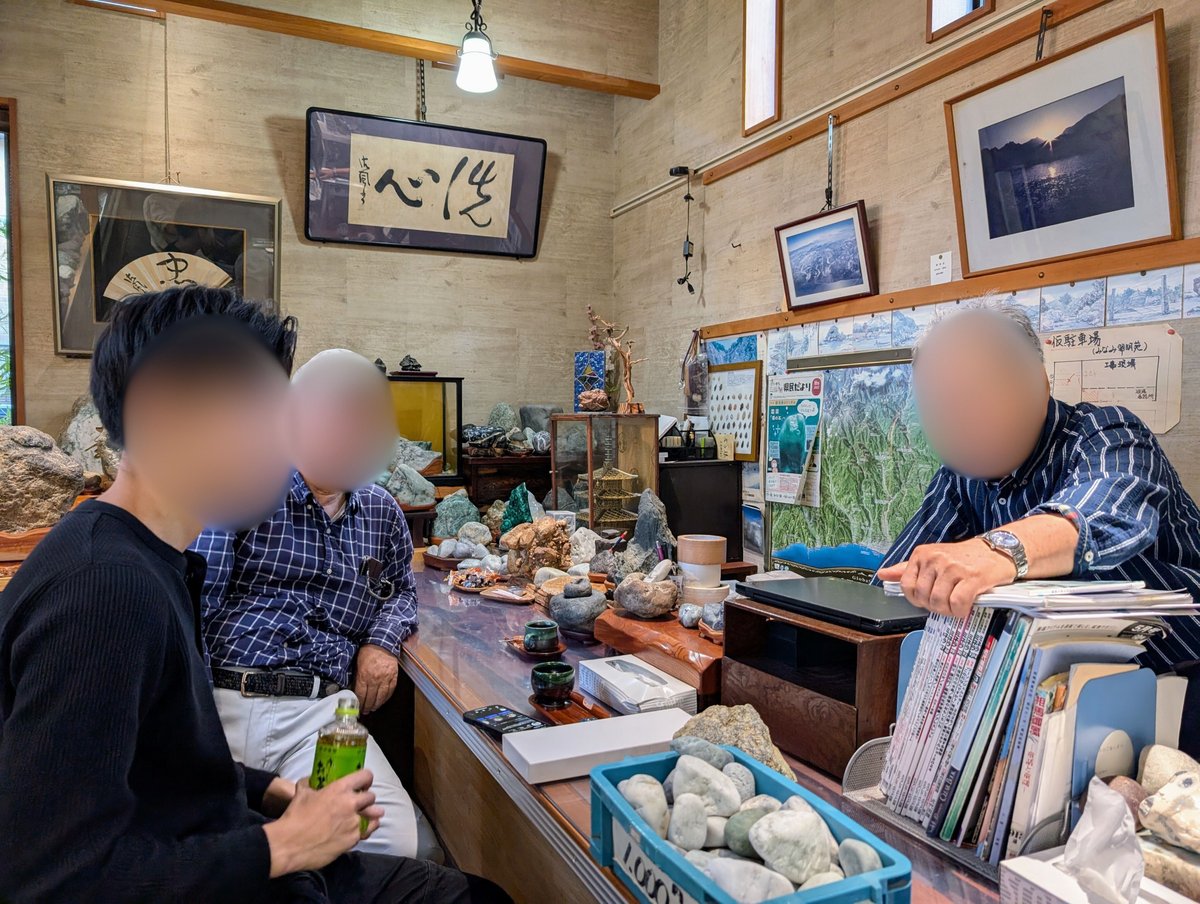
The mitate. The knowledge in that building isn’t in the display cases. It’s in the room. I read the place as a sanctuary, and the people in it as harbour pilots — the ones who know the channel, and who will take you through it.
What holds up. This one I can’t check, and I’m not going to pretend otherwise. It’s one afternoon in one room.
What I can check is why such knowledge exists here at all. The jade on the beaches did not form on the beaches. It comes from outcrops well inland — on the Kotaki, the same river Gyofū’s stone came out of, and on the Ōmi — and the rivers carry it down and drop it along the river mouths and the coast. So which stones come ashore, and when, is a question about rivers, weather and the sea — the kind of thing you can only learn by watching for years. It’s no coincidence that a town like this produces people like that.
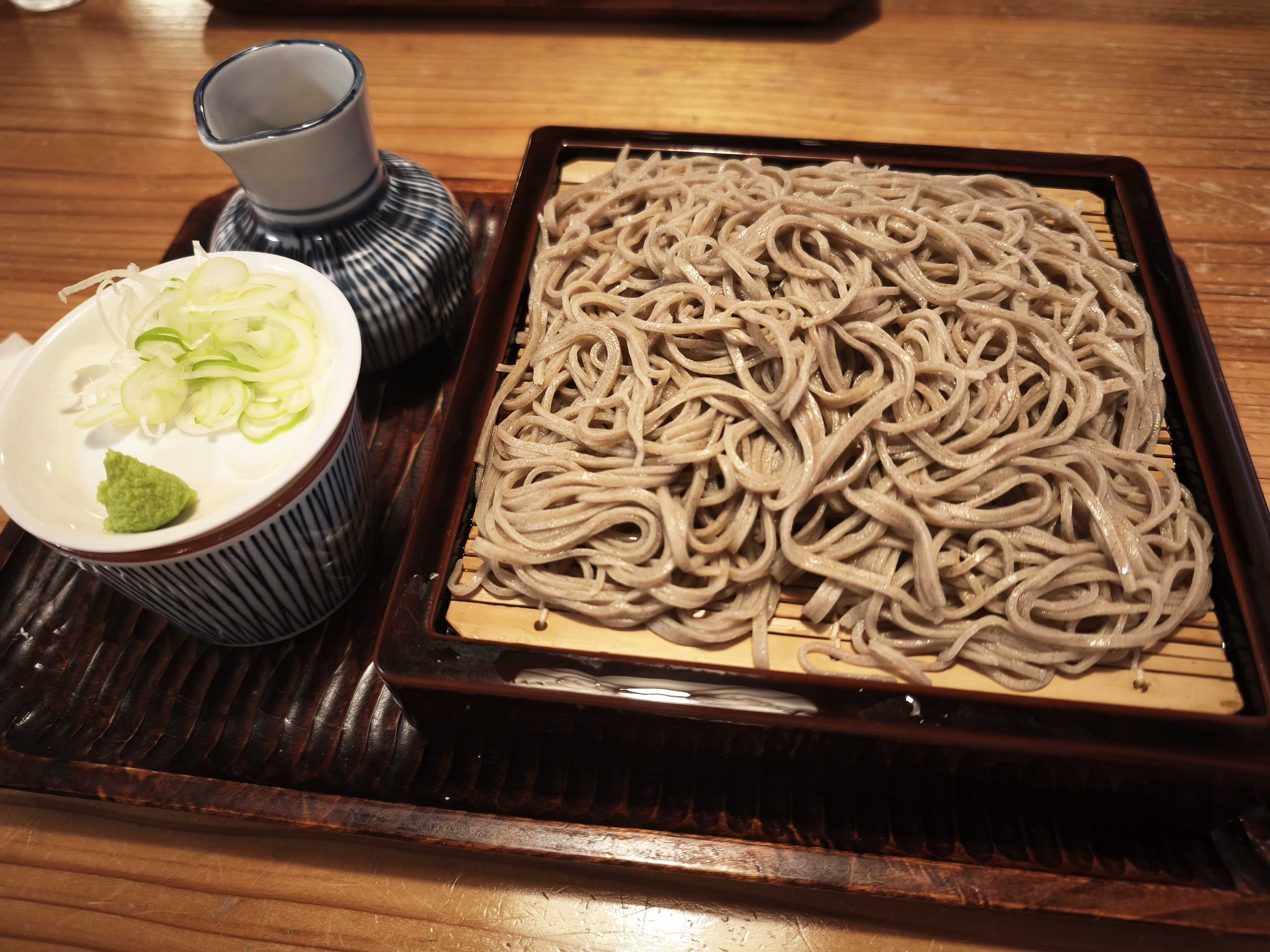
Where to eat near here. Izumiya, on the old main street about five minutes from the station, serves hand-cut soba and stays open straight through the afternoon. The hand-cut soba is made in one batch each morning, so it can run out. → Izumiya
4. The beach that beat me
What is there. Hisui Beach — jade beach — at Oshiage, a six-minute walk from the small station named after it. One of the harbour pilots offered me a lift out.
What is on the beach is stones. An impossible number of stones, and every one of them looks the same as all the others. I used everything I’d just been taught, found nothing whatsoever, and then the sun began to go down.
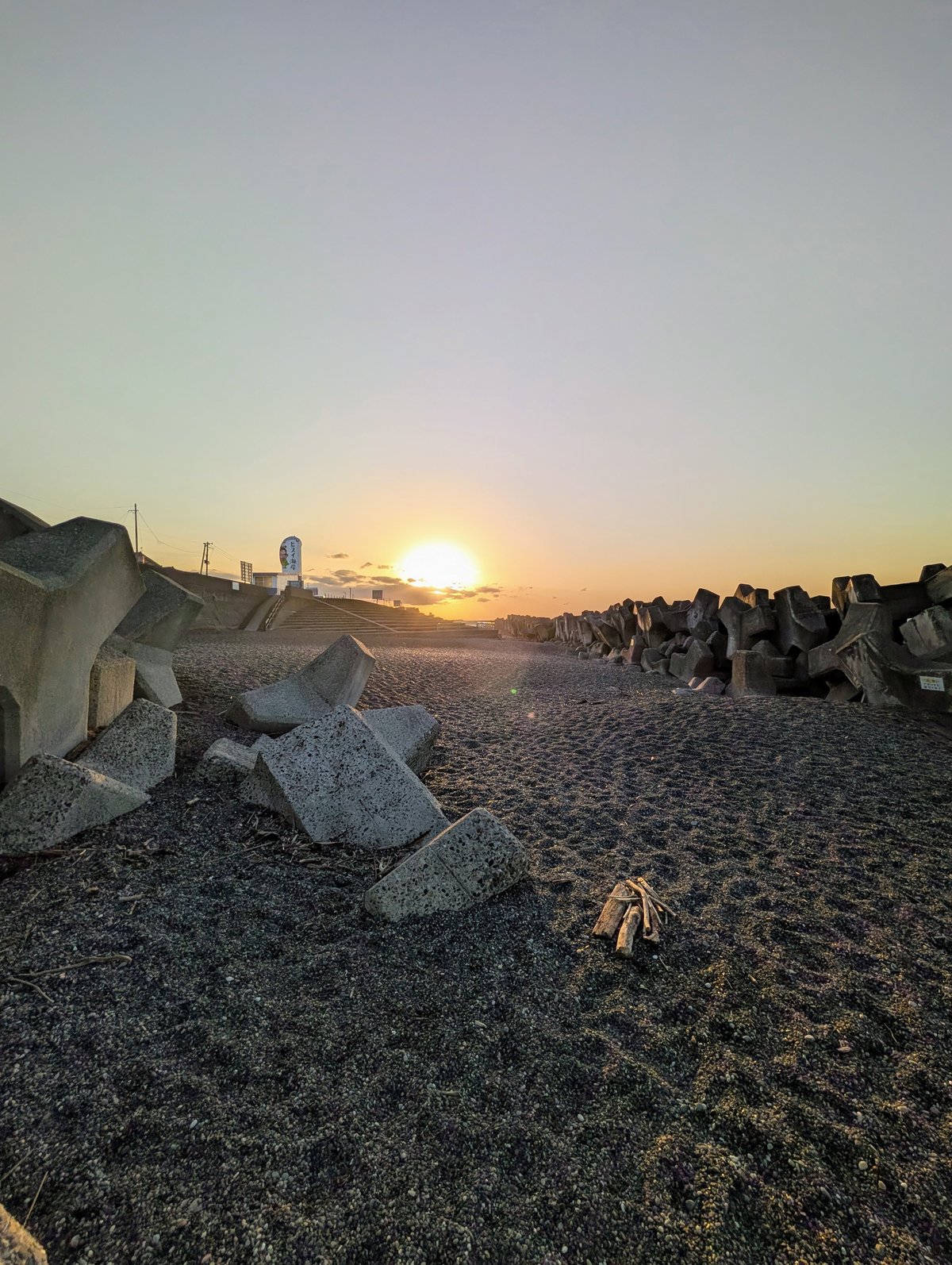
The mitate. On the way back I called it the goddess’s trial — though trial sounds grander than I mean. Nobody finds jade on their first afternoon. The stone is there in that shingle, and it does not come to you because you would like it to. It comes to people who have learned to see it, and learning that takes years. Not a judgement, then. Just time I had not put in yet.
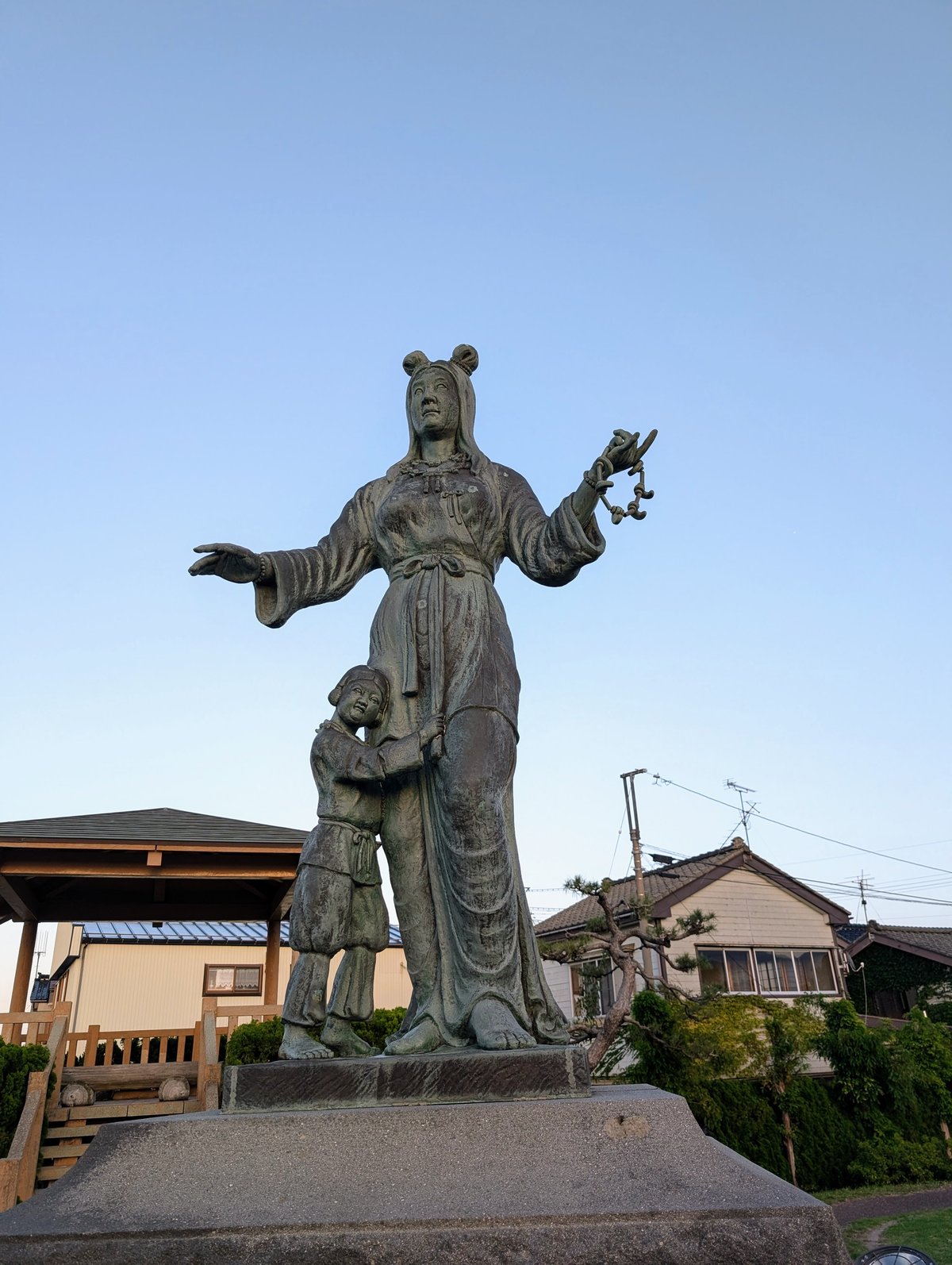
There is a bronze of Nunakawa-hime near the beach, a string of jade beads held up in one hand and a child at her side — her son by Yachihoko, in the local telling. The bronze has weathered green.
What holds up. Not finding anything was the evidence. An afternoon of finding nothing is the best measure I had of what the people in that room actually know. I couldn’t have learned it by succeeding.
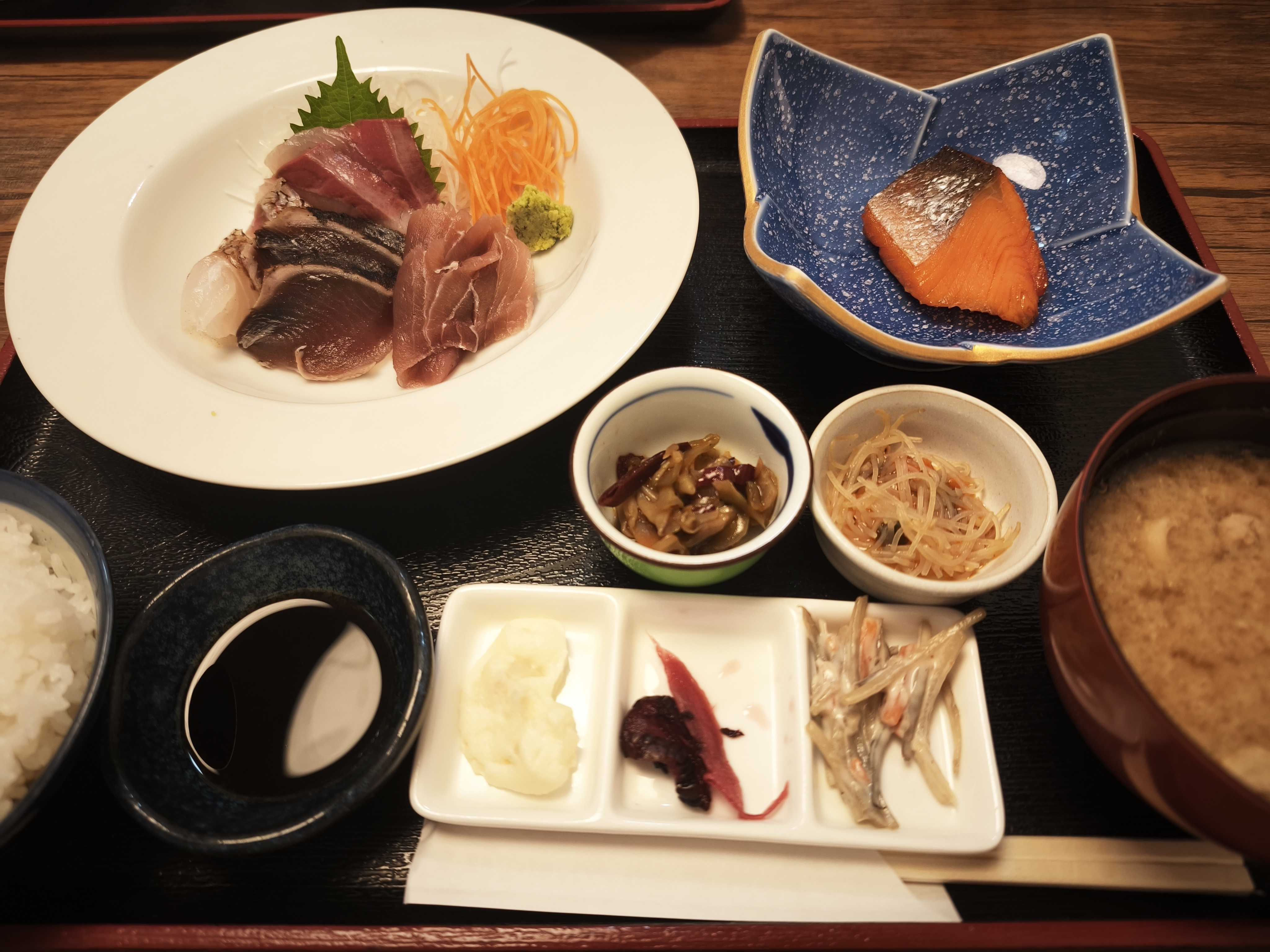
Where to eat after this. Back in town, Totoya no Hanare is run by a couple who sell fish for a living, two minutes from the station. Three of the staff are certified in a method of bleeding and ageing fish that has changed how Japan handles sashimi. → Totoya no Hanare
The names — Itoigawa
| The name | Verdict | |
|---|---|---|
| Black yakisoba | a delicious embarrassment | mine; not checkable, kept |
| Amatsu Jinja and Nunakawa Jinja | the queen, sealed | failed. She is in the register of 927. Kept instead as: two pasts in one yard |
| The museum of raw jade | the sanctuary | mine; not checkable, kept |
| The people inside it | the harbour pilots | mine; not checkable, kept |
| Looking for jade on the beach | the goddess’s trial | mine; it means jade takes years to learn, not that I was judged |
| Sōma Gyofū’s guess, 1930s | the mitate that came true | documented |
Gyofū’s reading of this town held, and it changed what the country knows about its own prehistory. Mine did not hold. Both are in the table above.
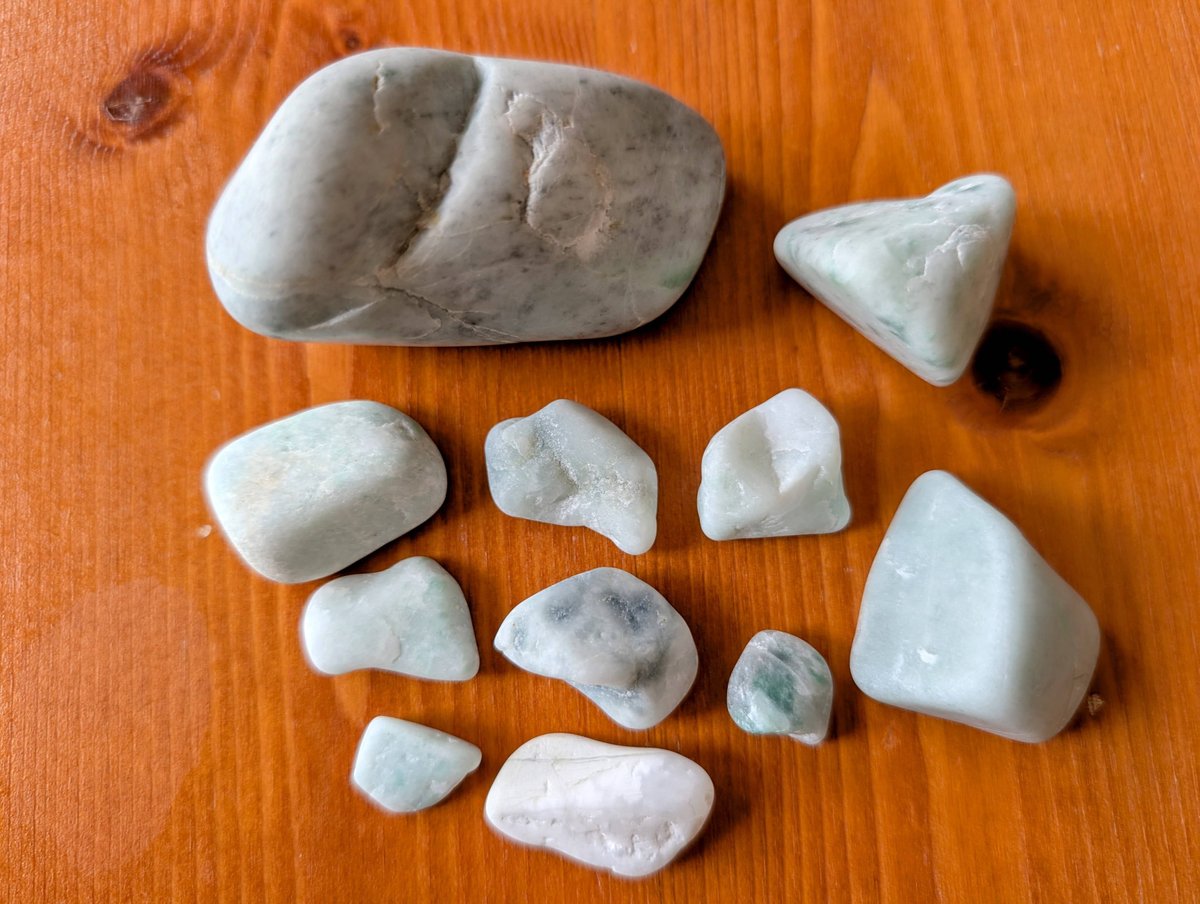
I did get a piece of jade, incidentally. I bought it at the museum, before I went to the beach. That belongs on the record too.
The rest is practical.
Where to eat in Itoigawa
- Aoi Shokudo — black yakisoba, two minutes from the station, open from ten.
- Izumiya — hand-cut soba on the old main street, no afternoon break.
- Totoya no Hanare — a fishmonger couple’s restaurant. Sashimi sets and seafood bowls. No fixed closing day, so ring ahead.
Getting there
Itoigawa is a stop on the Hokuriku Shinkansen, a little over two hours from Tokyo. Take a Hakutaka service — every one of them stops here. The faster Kagayaki trains do not, so check the train name and not just the line. Everything here except the beach is within about half a kilometre of the station. For the beach, take the local Nihonkai Hisui Line one stop east to Echigo-Oshiage-Hisuikaigan — 1.6km — and the beach is a six-minute walk from there.
The rest of it
- Amatsu Jinja and Nunakawa Jinja — Ichinomiya 1-3-34, Itoigawa. Open ground, no ticket, usually empty.
- Chiisana Itoigawa Hisui Genseki-kan (a little museum of raw jade) — Chūō 2-13-11, Itoigawa, a few minutes east of the station. Tel 025-552-3621 (+81 25-552-3621 from abroad; the call will be in Japanese). A private house-museum, open on certain days only.
- Hisui Beach — Oshiage, Itoigawa. A six-minute walk from Echigo-Oshiage-Hisuikaigan station. Finding jade is genuinely hard. Standing on that coast at the end of a long day is not, and it’s most of the reason to go.