
A kominka is an old Japanese wooden house. There is no fixed age that qualifies one, but the word carries a particular set of things: timber framing, sliding paper doors, tatami rooms, a small garden, low ceilings, and the sense that people lived there before anyone thought of putting tables in it.
Kamakura has a lot of them, and a good number now hold restaurants and cafes. That matters for a visitor, because it means you can eat well and spend an hour inside a kind of building you cannot easily get into otherwise. Temples you look at. A kominka restaurant you sit in.
These five are ones I have been to myself, in Kamakura and Kita-Kamakura. Below they are sorted two ways — by station, if you are planning a route, and by occasion, if you already know what kind of meal you want.
Choose by station
Kamakura Station
The busy end: the shrine approach, the shopping streets, the beach beyond.
Kissa Gallery AKI — about 10 min walk A cafe in a building that was a sake shop back in the Taisho era (1912–1926), now full of mid-century Showa retro character, with table seats and a tatami room. The spices behind the chai and curry come from a well-known Kamakura spice house. There is a gallery in the back that hosts workshops. The best value in this list for a low-cost, high-atmosphere break from the crowds.
Kadoya — about 20 min walk Italian, in a building that used to sell senbei rice crackers. Bright, popular, and serious about the food: lunch sets built on Kamakura vegetables, plus natural wine, which is not something every set-lunch restaurant bothers with. It was full by just after noon and turning walk-ins away, so book.
Kita-Kamakura Station
One stop up the JR line, and a different city: forested, quiet, and where the great Zen temples are.
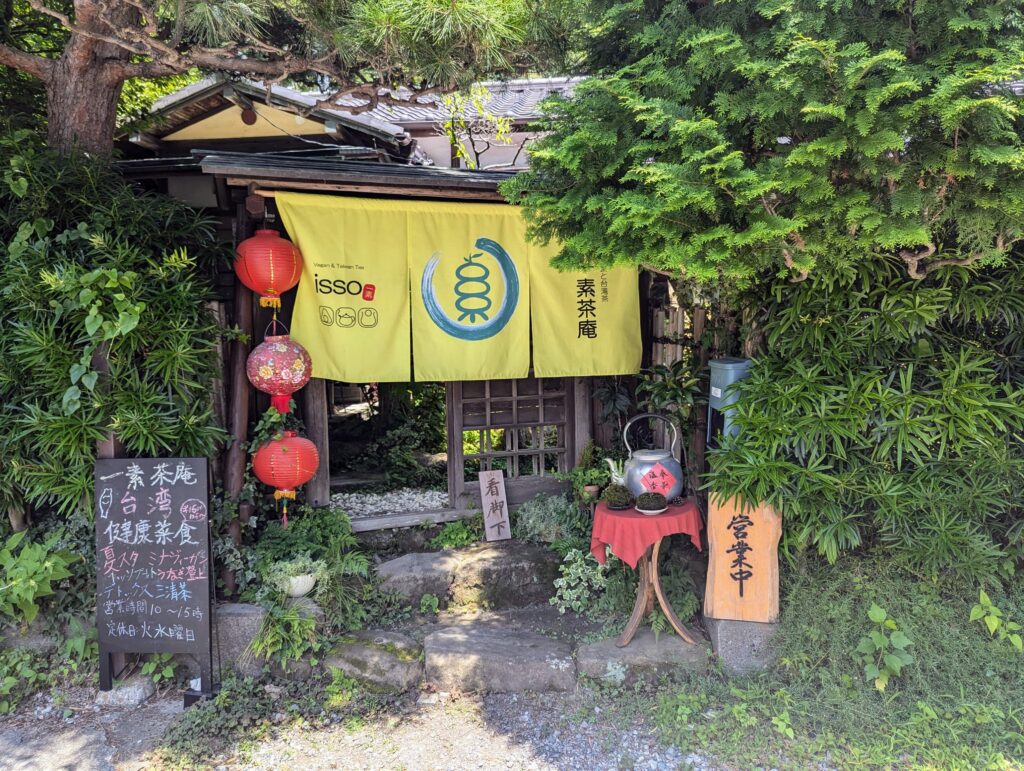
Isso Chaan — about 9 min walk Vegan Taiwanese cooking in an old house on the road to Kenchoji. Shoes off at the door, a tatami room, a garden of herbs through the window. The set plate changes monthly and leaves out meat, fish, dairy, egg — and also the pungent alliums avoided in Buddhist temple cooking. The Taiwanese tea is blended by the owner’s mother, who is from Taiwan.
Parlor Room — about 1 min walk A former antique shop — one small room, shared by two separate businesses. In the evening it is Parlor Room, run by the husband: small plates made for drinking, with craft beer and wine chosen with taste. By day the same room is a canelé specialist, Maya no Canelé.
Takeru Quindici — about 6 min walk A converted old house by Tokeiji, so quietly done that it reads as part of the temple streets rather than a restaurant in them. Italian, well regarded, and genuinely hard to get into — calling ahead left only a late slot at the counter. Reserve ahead.
Choose by occasion
| If you want… | Go to | Station |
|---|---|---|
| Coffee, chai and a sit-down, cheaply | Kissa Gallery AKI | Kamakura |
| A proper lunch that fills you up | Kadoya | Kamakura |
| Vegan, vegetarian, or plant-based | Isso Chaan | Kita-Kamakura |
| Drinks and small plates in the evening | Parlor Room | Kita-Kamakura |
| A special, book-ahead lunch | Takeru Quindici | Kita-Kamakura |
Before you go
Reserve where it says to. Kamakura is a day-trip city for Tokyo, which means the good small restaurants fill at predictable times. Kadoya and Takeru Quindici in particular are not places to walk up to at one o’clock on a weekend.
Walking times. Where the restaurant or its listing publishes its own figure, that is the number given here. Where none is published, the time is calculated from straight-line distance to the station with a detour factor applied — it is not a Google Maps walking time. Kamakura has flat streets and steep ones, so treat a calculated figure as approximate.
Stations are given as JR stations. Kissa Gallery AKI is the one to note: it is 7 minutes from Wadazuka on the Enoden local line, but 10 minutes from JR Kamakura, and you will almost certainly arrive on the JR. So the times above are from Kamakura and Kita-Kamakura.
Shoes come off in some of these houses. Isso Chaan is the clear case here. It is worth a thought when you choose your footwear for a day of temples and old buildings.
Check the opening days. These are small, independently run places, and four of the five close on fixed days: Kissa Gallery AKI on Mondays and Tuesdays, Isso Chaan on Tuesdays and Wednesdays, Parlor Room on Sundays, Mondays and Thursdays, and Takeru Quindici on Tuesdays plus one irregular day each month. Only Kadoya opens daily. Each individual page lists what was confirmed, and when.