
Kita-Kamakura is the green, quiet end of Kamakura — the station where you get off for the great Zen temples rather than for shopping. Isso Chaan sits partway along the road that leads to Kenchoji, set slightly back from the Kamakura-kaido, behind an old-style wooden gate that is easy to walk straight past.
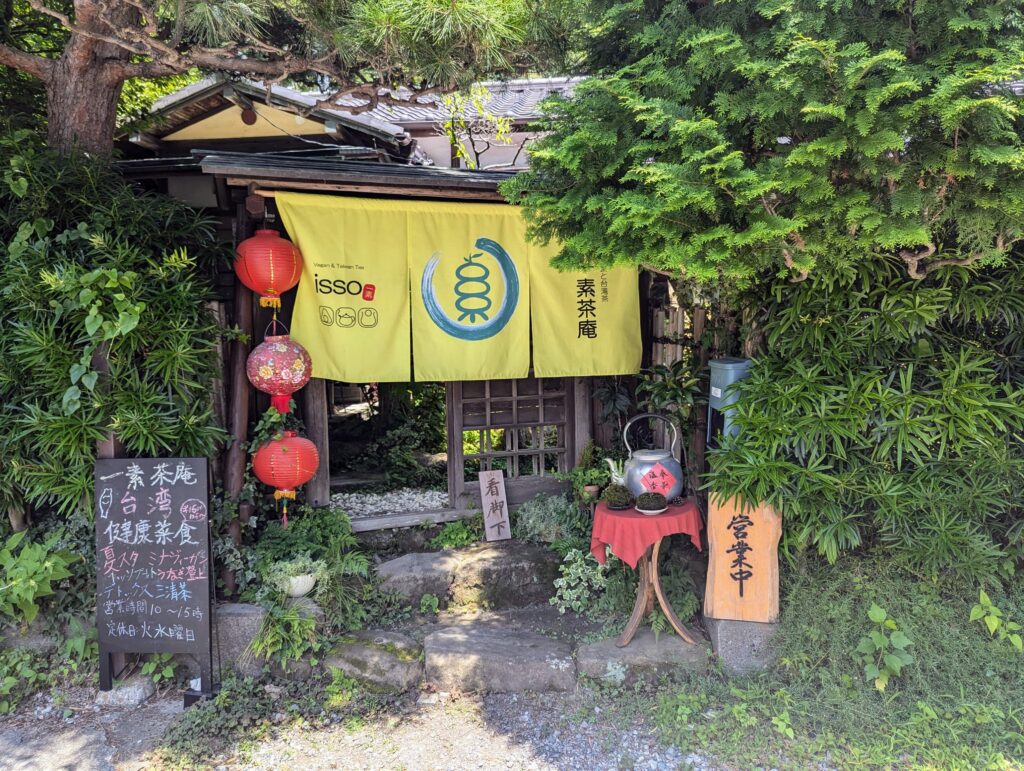
It is a vegan Taiwanese restaurant, in a kominka — an old Japanese wooden house.
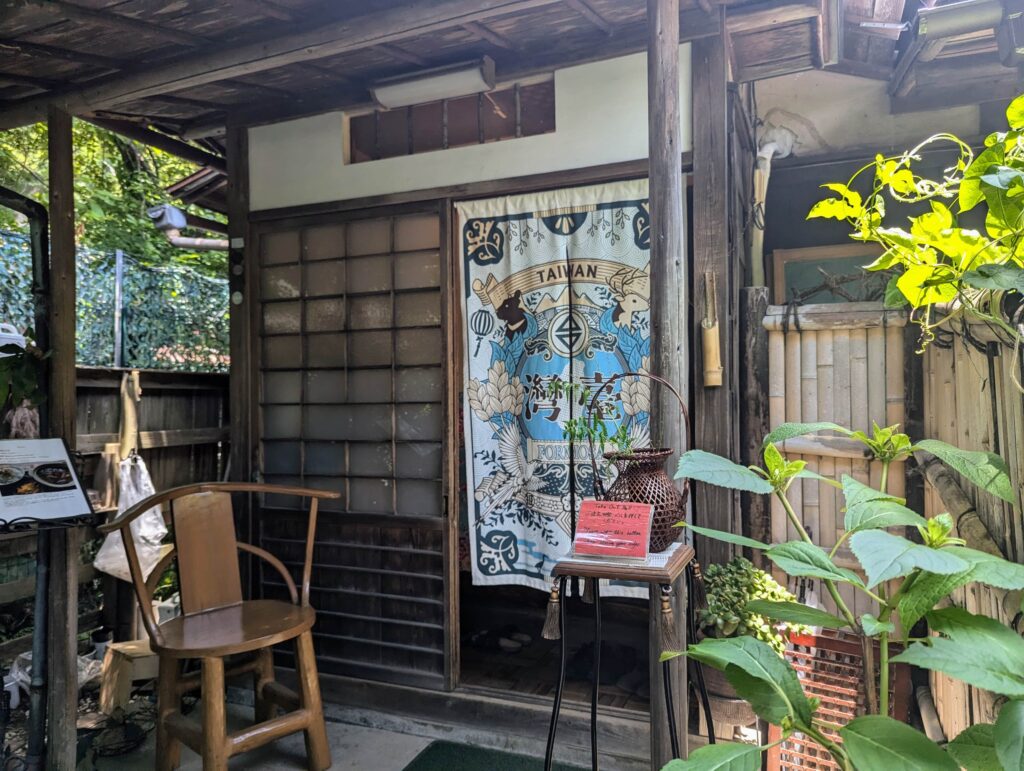
Shoes off at the entrance
The entrance is exactly as it would have been in a private home, and you take your shoes off before stepping up into the house. (Worth knowing if you are planning your footwear for the day: this is a slip-off-easily kind of lunch.)
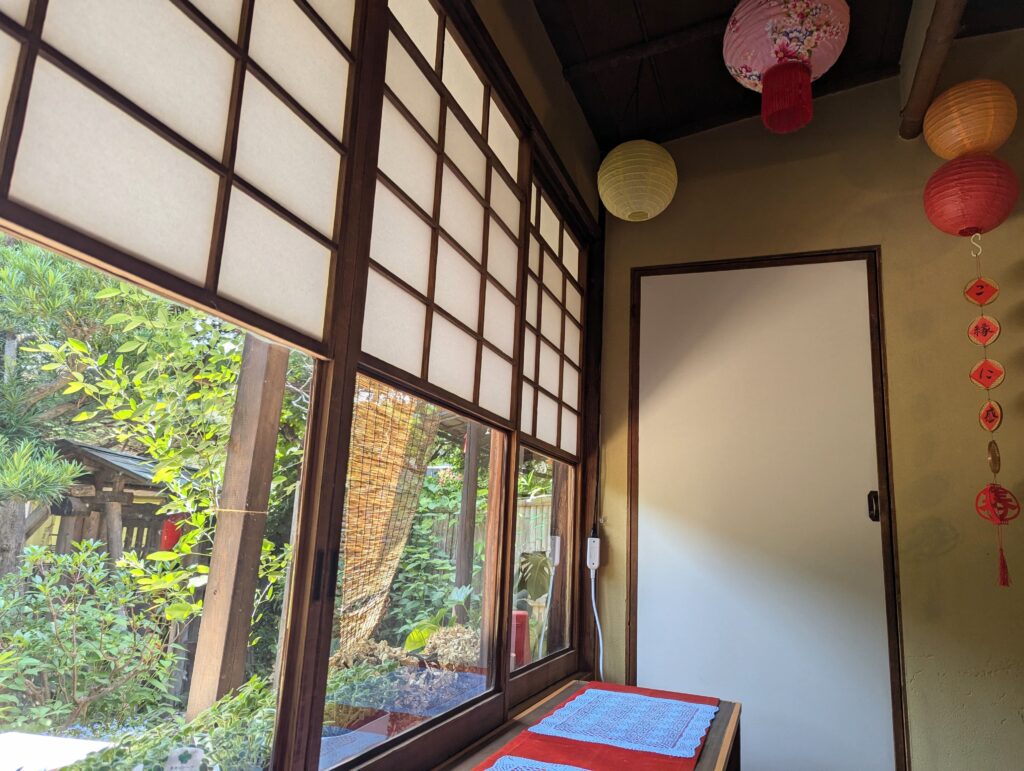
You are shown into a washitsu, a tatami-matted Japanese room — warm, a little nostalgic, the kind of space that makes you slow down without being asked to.
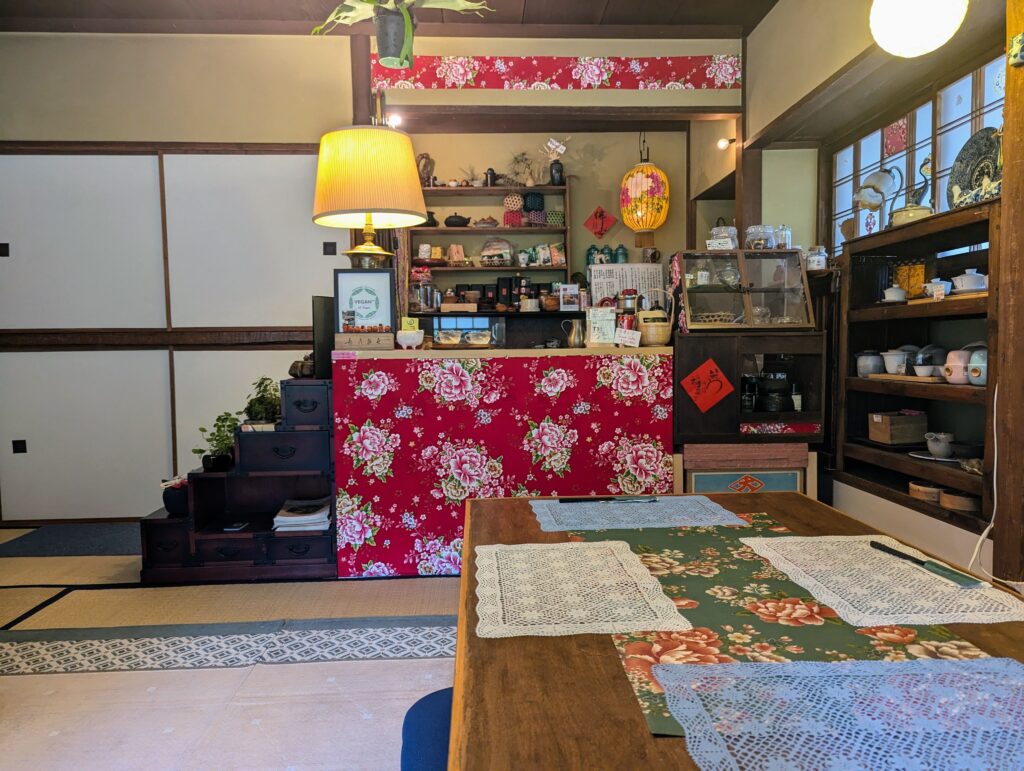
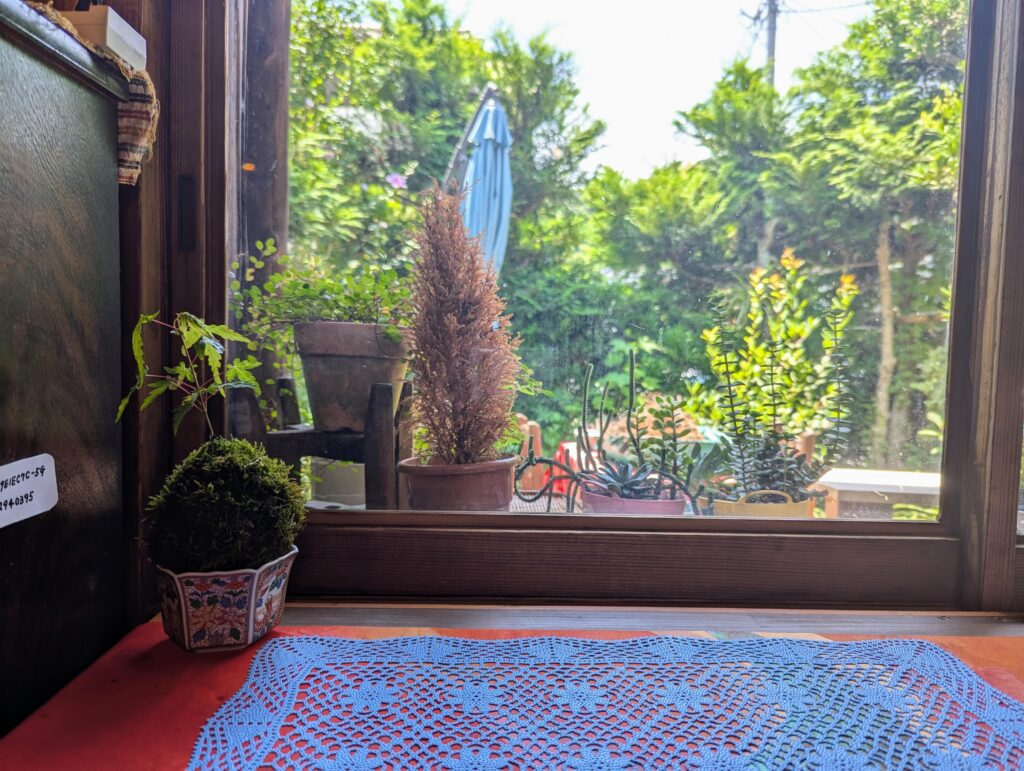
Ask for a window seat if there is one. The garden is visible from there, and herbs and other plants are grown in it.
What you eat
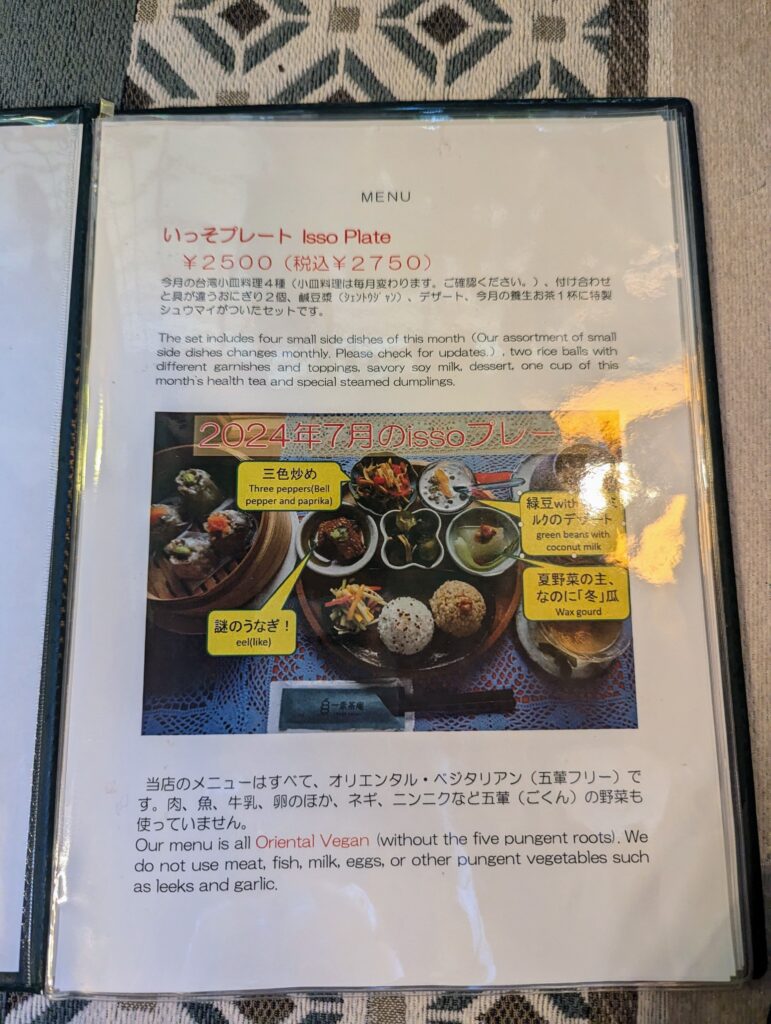
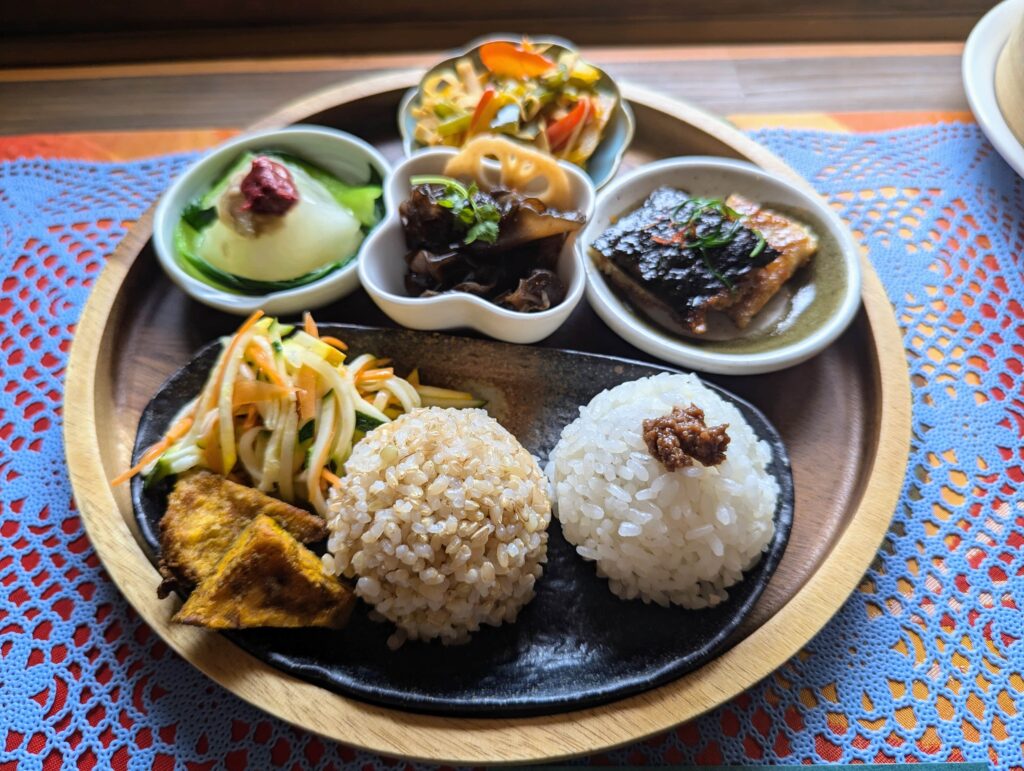
There are a few lunch options; the one to order is the Isso Plate. It changes every month, so what arrives depends entirely on when you come.
The cooking here goes further than most vegan kitchens. No meat, no fish, no dairy, no egg — and also none of the gokun, the five pungent vegetables (onion, garlic and their relatives) that are traditionally avoided in Buddhist temple cooking. That constraint is what gives the food its character rather than what limits it.
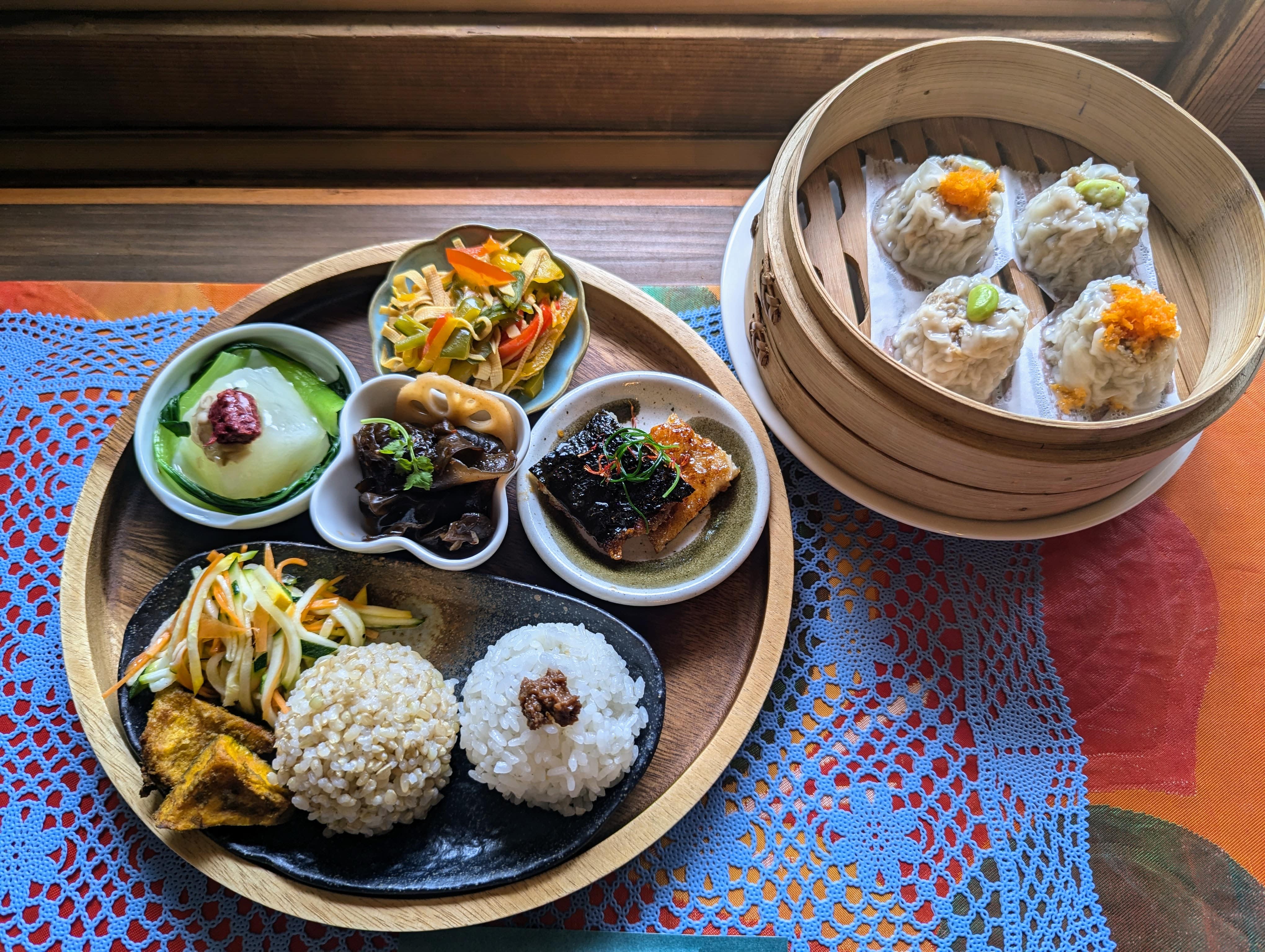
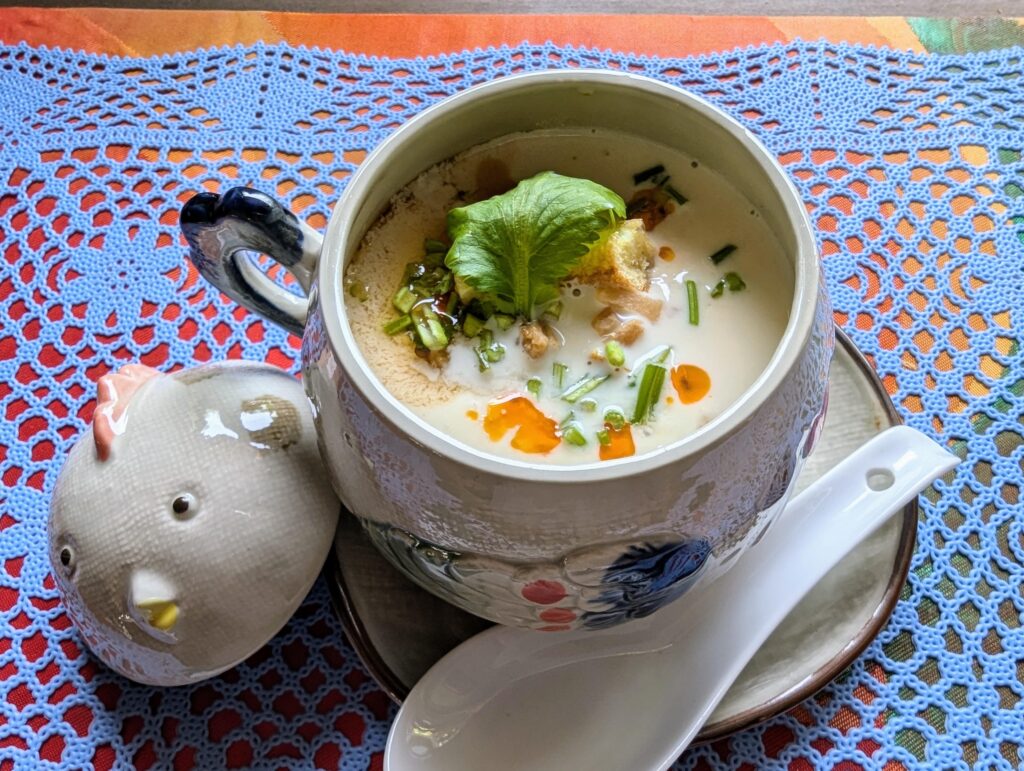
Lunch opened with a soy milk soup in the style of shendoujiang, the Taiwanese breakfast classic — savoury, layered, with enough in it to eat rather than sip.
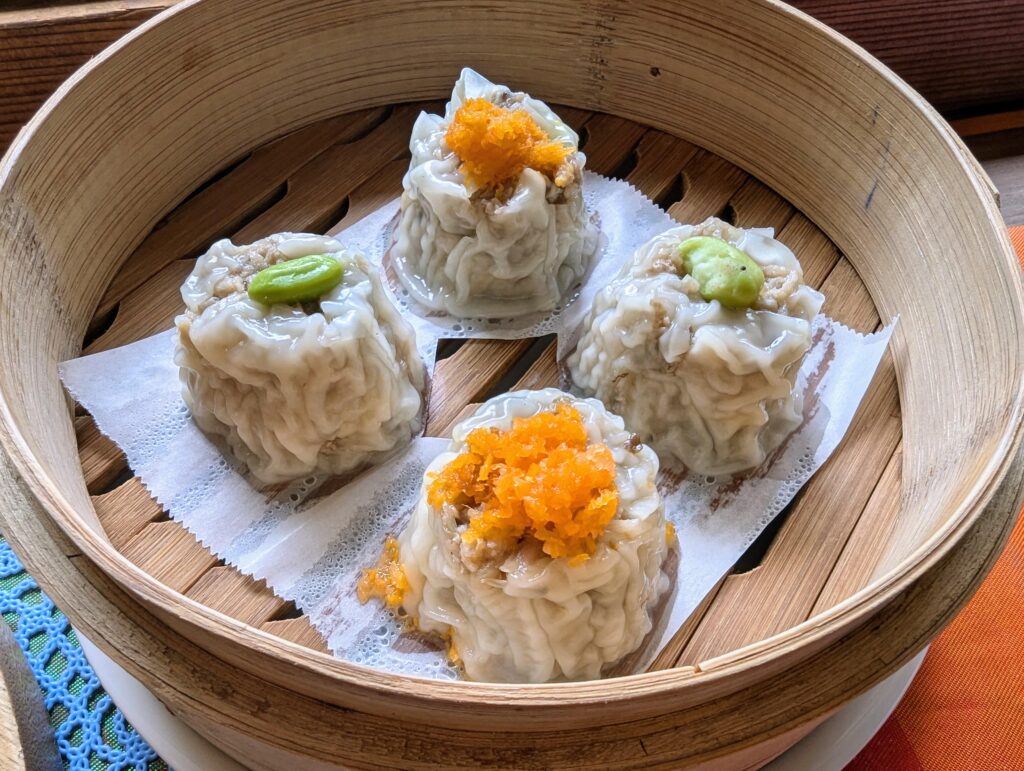
Then the plate itself: four Taiwanese small dishes, two rice balls, and a vegan shumai dumpling.
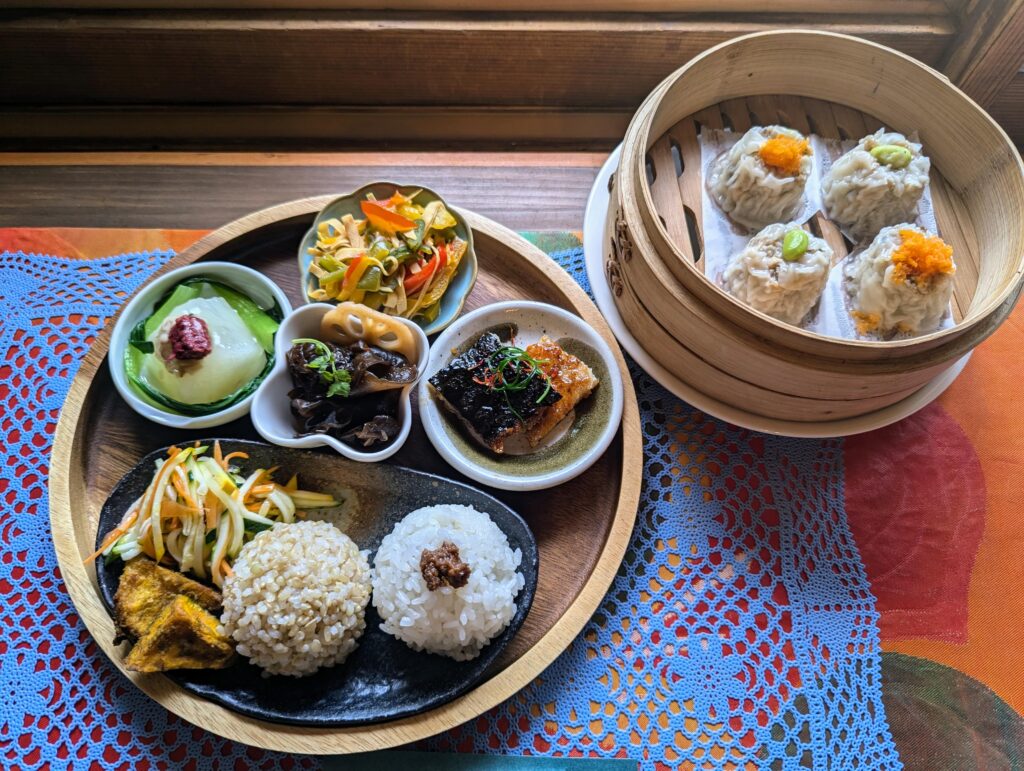
Because my visit fell around Doyo no Ushi — the midsummer day when Japan traditionally eats grilled eel — one of the dishes was an eel impression built from nori seaweed and mountain yam. This is the sort of detail that tells you the monthly menu is actually being thought about.
The shumai is made with soy meat, and holds its own against the meat version in both look and bite.
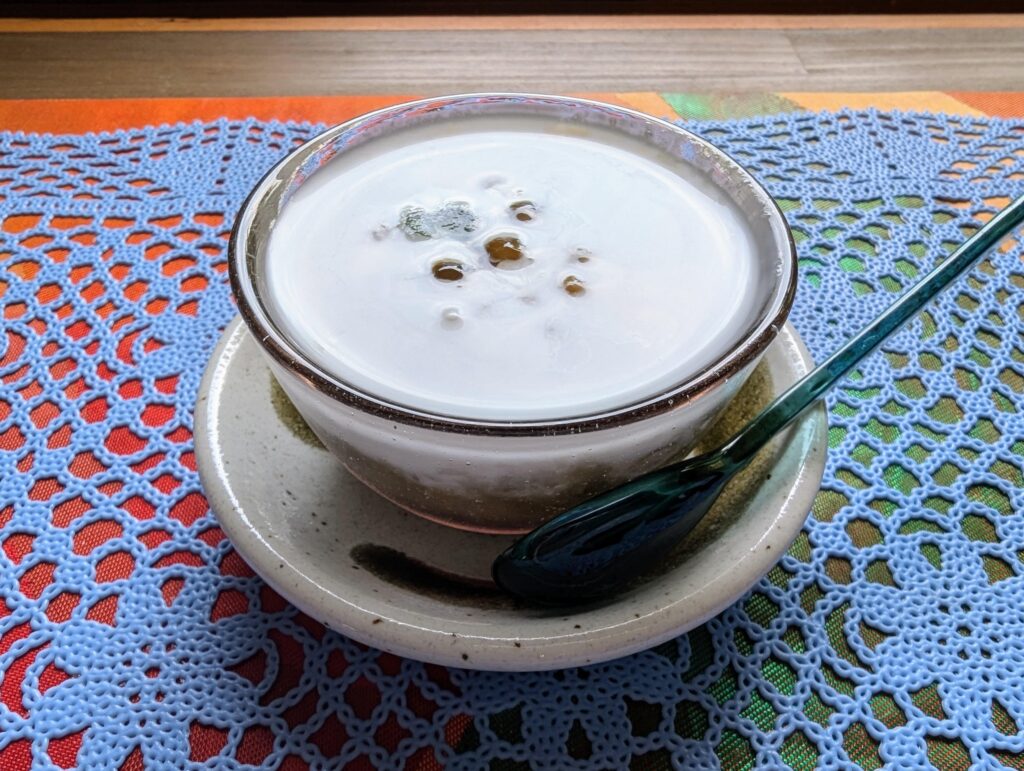
Dessert was mung beans with coconut milk — the texture of the beans against the milkiness, nicely balanced.
Entirely plant-based, and still a full meal. You leave light rather than heavy, which is not a small thing if you have temples to walk to afterwards.
Then there is the tea
The other reason to come is the Taiwanese tea: an original blend put together by the owner’s mother, who is from Taiwan. It is gentle, and it is the part of the meal you will want to sit over.
Tea-tasting events are held here from time to time, comparing one tea against another.
Good to know
- Fully vegan, and strict about it.
- Shoes come off at the door.
- Combine it with Kenchoji, which is further along the same road.