Itoigawa sits at the western end of Niigata, where the mountains come down close to the Japan Sea. It is jade country, and that is what I came for — a morning in the jade shops, an afternoon up at the Kotakigawa gorge, and then back into town with very little of the evening left.
Izumiya was still open. It is a soba restaurant on the old main street, and by the time I got there it was the last thing serving.
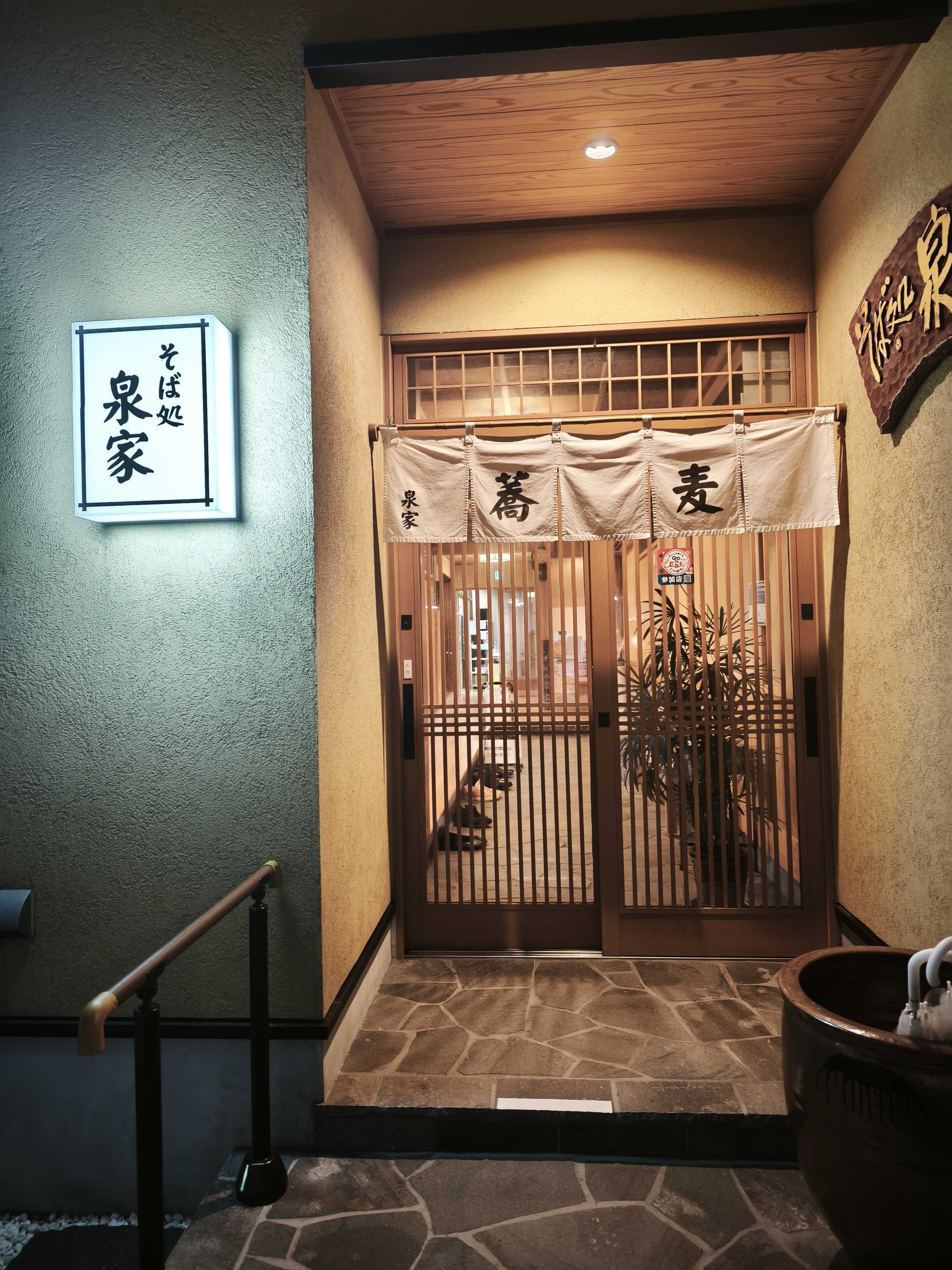
The street it stands on
On 22 December 2016 a fire began near Itoigawa station and burned for around thirty hours. It took the Omachi and Honcho districts — the ground running from the north side of the station down towards the sea.
Izumiya went with them. I was told this in the restaurant itself: the building standing here now was put up afterwards.
So the room you eat in is new. What is inside it is deliberately not.
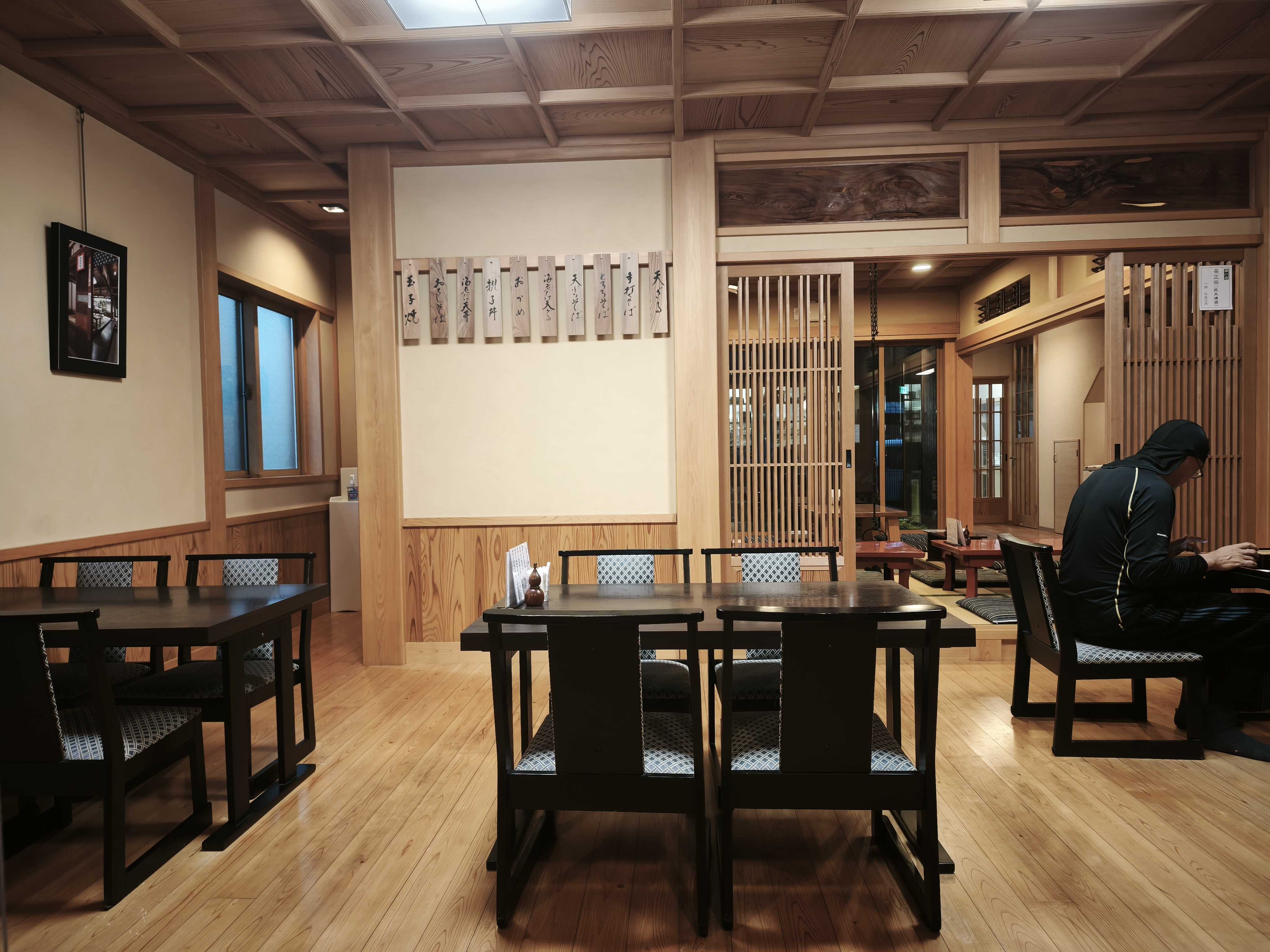
There is a raised tatami room along one side, and an irori — the sunken open hearth of an old Japanese farmhouse — built into the seating. The room is wide, wooden and very clean, and it is doing a careful impression of a soba shop from sixty years ago. You take your shoes off at the door and step up.
Regulars kept arriving the whole time I was there, at an hour when a restaurant is entitled to want everyone gone. The woman running the room did not hurry any of them.
What they actually make
The buckwheat is domestic, stone-ground, and hikigurumi — milled with the husk left in, which is what makes it dark and gives it the scent. The noodles are nihachi, eighty per cent buckwheat to twenty per cent wheat.
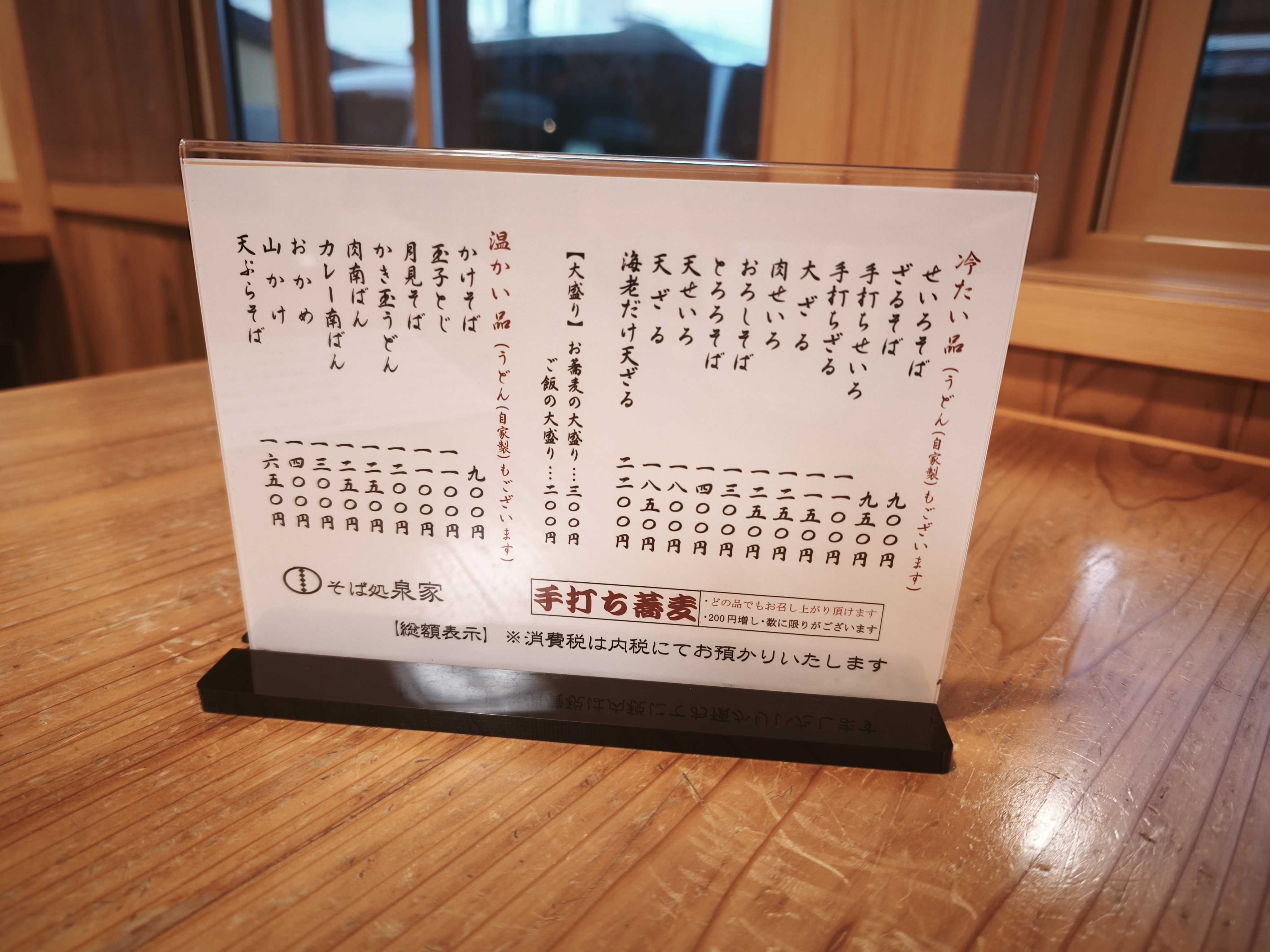
The menu runs the soba at two grades. There is the standard seiro, and then, for a little more, the hand-cut version — and only the second one is limited. It is cut once each morning, in a single batch of a dozen or so servings. Once that batch has gone it has gone for the day; the rest of the menu carries on as normal.
There was still some left when I arrived, not long before last orders. That was luck rather than planning. If the hand-cut is what you have come for, get there earlier in the day, or telephone ahead and ask them to set some aside.
The broths are made twice over. A soba shop builds its base from kaeshi, a soy mixture aged before use, and this kitchen makes two of them — one for cold noodles, one for hot. The cold broth is meant to be dipped into. The hot one is meant to be drunk. There is no MSG in the kitchen.
Hand-cut seiro
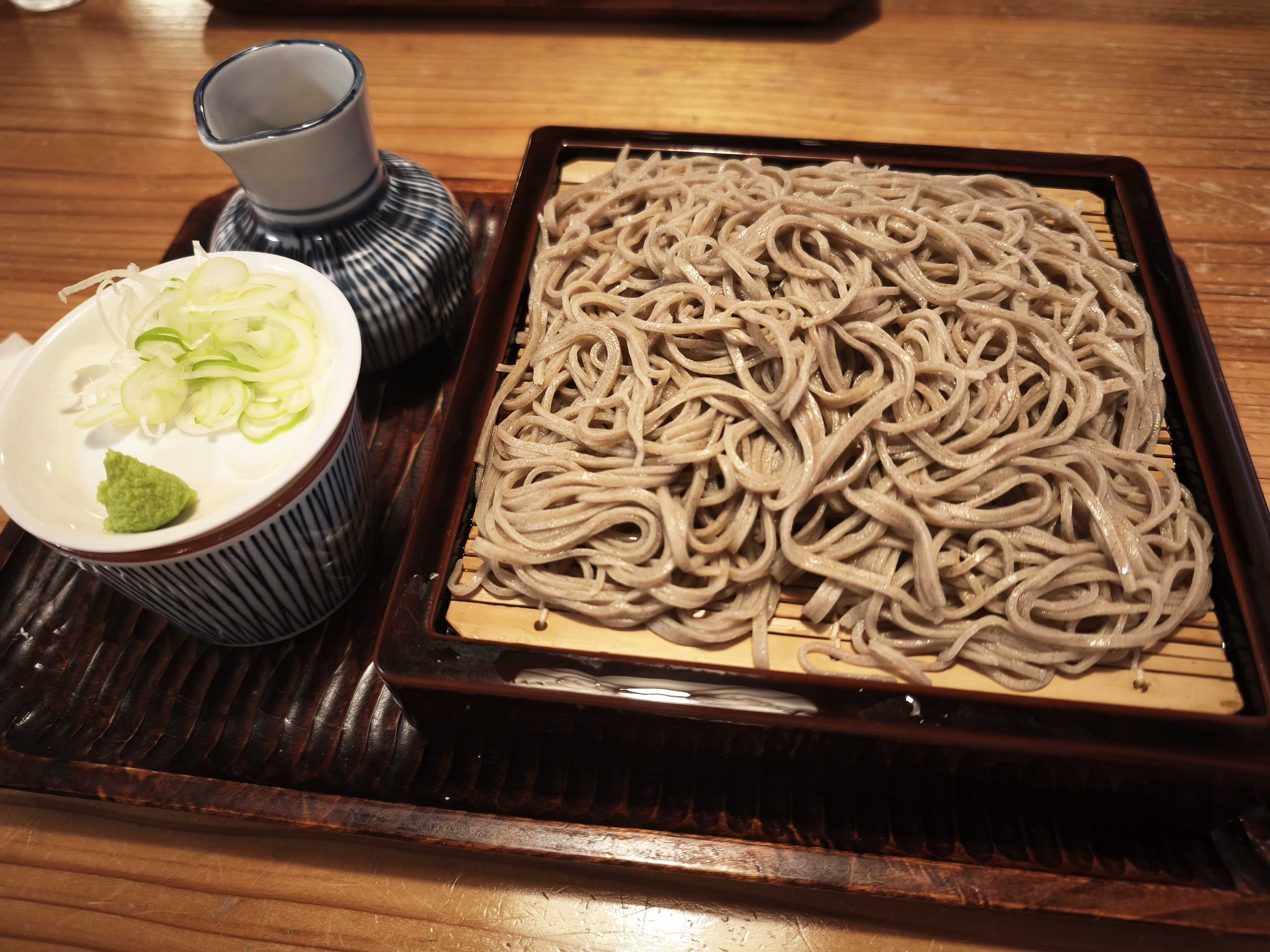
Cold noodles on a slatted tray. The edges were sharp, the scent came up straight away, and the sweetness arrived on chewing rather than at first taste. Nothing about it is showy. It is simply well made, at a price that has not been inflated by the fact that the town has a UNESCO Geopark attached to it.
Finish the way everyone else in the room does: ask for the soba-yu, the starchy hot water the noodles were boiled in, and pour it into what is left of your dipping broth.
Good to know
- Closed Tuesdays and Wednesdays — two days, not one. Check before you plan a lunch around it.
- It stays open straight through the afternoon, which is unusual and useful in a town this size.
- Weekend and holiday lunchtimes, 11:00 to 14:30, cannot be reserved. Any other time, they will take a booking.
- Cards are accepted. This changed in July 2026, so older listings will tell you otherwise.
- There is a car park, and the shopping street has free parking as well.